◷ Mon- Fri 8:00 AM – 5:00 PM 

  Free Shipping
  1. Home
  2. Headstones & Memorials Near You
  3. Custom Monuments in Rome, GA
Clear Stream Monuments · Serving Rome, Georgia

Custom Monuments in Rome, GA: Plan the Memorial Around the Property, Story, and Setting

A custom monument should do more than fill an approved space. It should organize names, relationships, words, and imagery into a lasting record that can be read clearly and set safely. Clear Stream Monuments helps Rome families develop that record from our granite workshop in Elberton, Georgia, where the surrounding industry has specialized in quarrying and monument production for generations.

Clear Stream Monuments is based in Elberton, Georgia; regional installation in Rome may be available by arrangement after project and site review.

Clear Stream does not have a verified office or showroom in Rome. The project workbook places Rome about 160 miles, or roughly 3 hours 21 minutes, from the Elberton workshop. That distance puts the city in the regional-service category: installation may be available by arrangement, but only after the memorial, cemetery approval, foundation, equipment access, schedule, and site conditions are reviewed. The mileage and driving time are geographic context, not freight, production, delivery, or installation promises.

In Rome, the first planning question is not which monument appears most appealing in a catalog. It is which cemetery, section, lot, and type of interment the memorial must serve. The City maintains several historic properties and a newer mausoleum, while private, church, and family cemeteries may follow entirely different rules. Identifying the controlling authority early protects the family's design work and makes every later decision more useful.

Local context

One City, Several Cemetery Contexts

The City of Rome Cemetery Department says it maintains 99 acres across four historic cemeteries—Myrtle Hill, Oak Hill, Eastview, and Oakland—along with the newer Myrtle Hill Mausoleum. The Department also identifies grave-marker requirements, records information, flower use, and vault requirements among the services it provides. That is valuable local guidance, but it is not a universal specification for every burial space in Rome.

Use the official City of Rome Cemetery Department page to identify the municipal contact path and then request the current rules for the exact property, section, lot, and memorial type. The public page does not publish a complete set of dimensions, foundation specifications, installer requirements, or receiving instructions for every section, so those details should be obtained in writing before production.

Path 1

Historic municipal cemeteries

Request current, section-specific monument rules, dimensions, approvals, access, and foundation instructions.

Path 2

Myrtle Hill Mausoleum

Distinguish a City-operated crypt or niche from a separate private family mausoleum.

Path 3

Private, church, or family cemeteries

Contact the actual owner or operator because their rules may differ.

Historic properties make the exact location especially important

Rome's municipal cemetery portfolio spans different periods and settings. The City describes Oak Hill as its first cemetery, established in 1837; Myrtle Hill as established in 1857, listed on the National Register of Historic Places, and containing approximately 20,000 graves; Oakland as established in 1868; and Eastview as established in 1911. Those dates do not tell a family what size monument is permitted, but they show why a single citywide assumption would be unreliable.

A historic cemetery may contain older memorials that would not necessarily be approved under current rules, and neighboring stones are not a substitute for written authorization. Ask the municipal office to identify the correct record, section, right-of-interment holder, monument application, placement point, current dimensional envelope, and work procedure. A preservation-minded property may also require closer coordination around access, existing memorials, and final cleanup; the responsible cemetery and setter should evaluate the actual site rather than rely on generalized claims.

Oak Hill
1837
Myrtle Hill
1857
Oakland
1868
Eastview
1911

The Myrtle Hill Mausoleum is a separate planning branch

The City reports that the Myrtle Hill Mausoleum was completed in December 2013 and overlooks the confluence of the Coosa, Etowah, and Oostanaula Rivers. A crypt or niche in a municipal mausoleum is not the same purchase as a freestanding family monument. The City controls the interment space, permitted lettering or memorialization, application, fees, and installation process for its facility. Families considering a private family mausoleum or a separate cremation memorial need a different written approval and site plan.

Clear Stream currently displays family-mausoleum options, but a product image is only a design reference. Before design or pricing is treated as final, the cemetery must verify that a private structure is allowed, where it may stand, what engineering or foundation documentation is required, who may install it, and how delivery equipment may enter the property.
Municipal rules do not transfer to private or church cemeteries

If the grave is not in a City-maintained property, identify the actual owner or operator. A church board, cemetery association, private company, family trustee, or other authority may control the plot. Ask that authority for its own current rules, approval form, fee schedule, installer requirements, and delivery instructions. Do not apply the City of Rome's procedures, historical details, or contacts to an unrelated property.

Monument options

Choose the Monument's Job Before Its Shape

Monument is the primary theme of this page because the word can cover a broad family of permanent memorials. A monument may identify one grave, unite two spaces, anchor a family lot, hold future inscriptions, create a focal point, or provide a place for cremated remains when the cemetery allows it. Deciding what the memorial must do helps the family use the available footprint and inscription area with intention.

The Clear Stream memorial gallery can help families compare scale, silhouette, and design language. Treat those examples as a starting point; the quote and proof should translate the selected idea into the exact approved dimensions, granite, finishes, components, inscriptions, and installation plan for the Rome burial space.

Note: Availability and permitted forms depend on the exact cemetery, section, lot, and memorial rules. Cemetery approval is required before final specifications are established.

Clear Stream Monuments | Custom Monuments in Rome, GA

Individual upright monuments

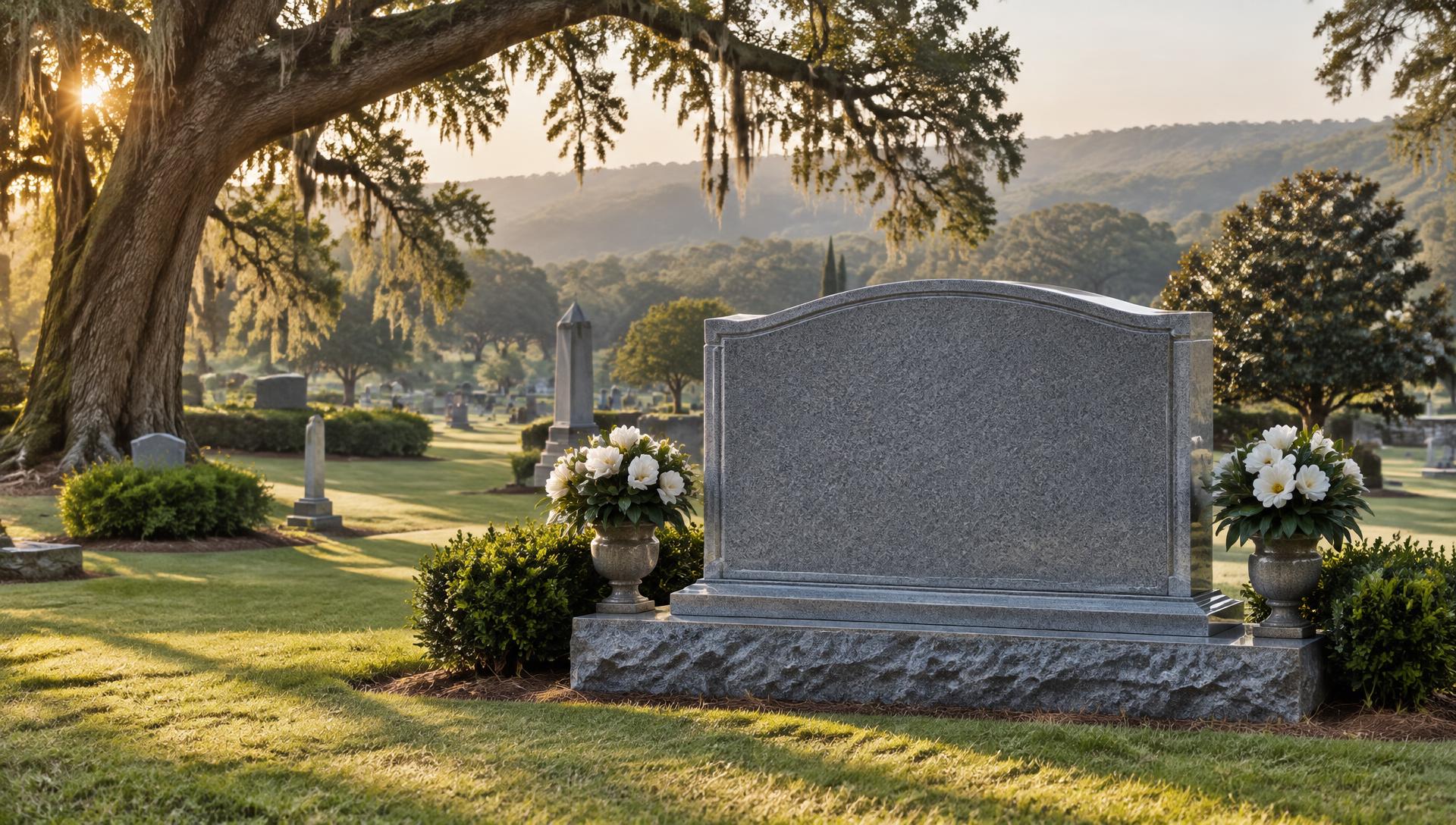
An upright monument usually consists of a vertical tablet supported by a granite base. Its height provides visibility and more design area than most lawn-level markers. That can accommodate a name, dates, epitaph, portrait, service emblem, faith symbol, floral carving, or scene without forcing every element into a narrow field. The vertical component, base, and below-grade foundation form a system; the cemetery should approve each relevant dimension and the setter should confirm how the pieces will be handled and aligned.

Ask whether the section regulates total height, tablet thickness, base width and depth, polished areas, edge treatment, orientation, or spacing from adjacent memorials. If the approved face is modest, prioritize the person's name and dates before adding ornament. A readable, quiet composition usually carries more dignity than a crowded design whose lettering becomes too small.

Families can compare upright monument forms after the cemetery has supplied the permitted envelope.

Clear Stream Monuments | Custom Monuments in Rome, GA

Companion monuments for two spaces

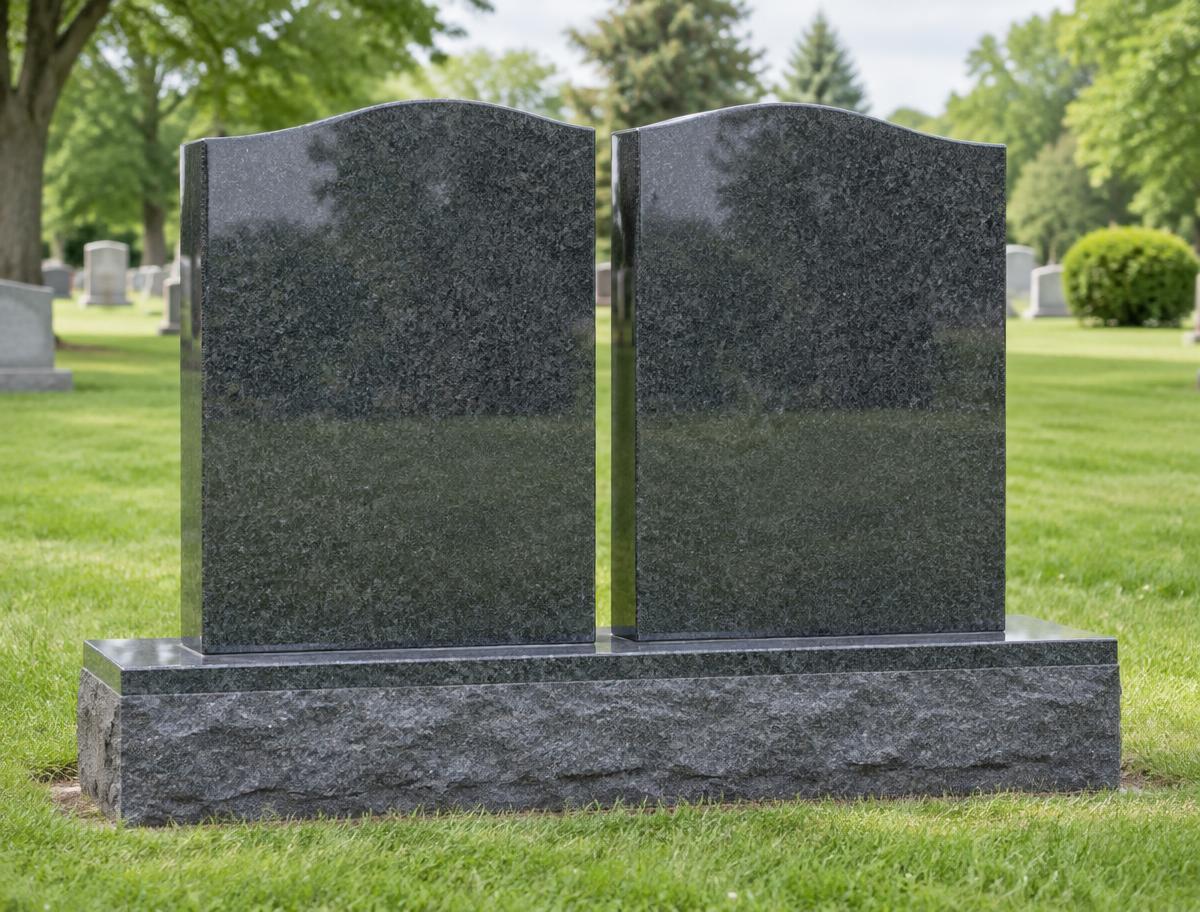
A companion monument can present two lives in one coordinated composition. It may use a shared surname, central symbol, balanced portrait fields, separate inscriptions, or room for a future date. Before design, confirm that the family controls both spaces and that the cemetery permits one tablet, base, and foundation to serve them. The approved grave spacing determines whether a proposed base can physically and legally span the intended area.

Future lettering should be planned on the first proof. Reserve enough physical area, record the typeface, layout, carving or etching method, contrast treatment, and access expectations, and identify who may authorize the later work. Leaving an empty rectangle is not enough if the future date would be difficult to add safely or match visually.

Clear Stream Monuments | Custom Monuments in Rome, GA

Family and estate monuments

A family monument may act as the principal memorial for several related graves. The central stone can carry the family name or a shared statement while individual markers identify each person. This form demands more planning than simply enlarging an individual headstone: the family needs a verified lot plan, ownership and authorization record, grave locations, central-monument footprint, individual-marker scheme, future inscription policy, landscape or access rules, and a consistent setting plan.

The family should decide how future generations will identify the controlling documents and who may approve additions. A dimensional drawing that shows the central monument, each grave, planned markers, and walking or equipment clearances can be more useful than a decorative rendering alone. Cemetery approval should address the whole arrangement, not only the first stone ordered.

Clear Stream Monuments | Custom Monuments in Rome, GA

Flat granite and bronze grave markers

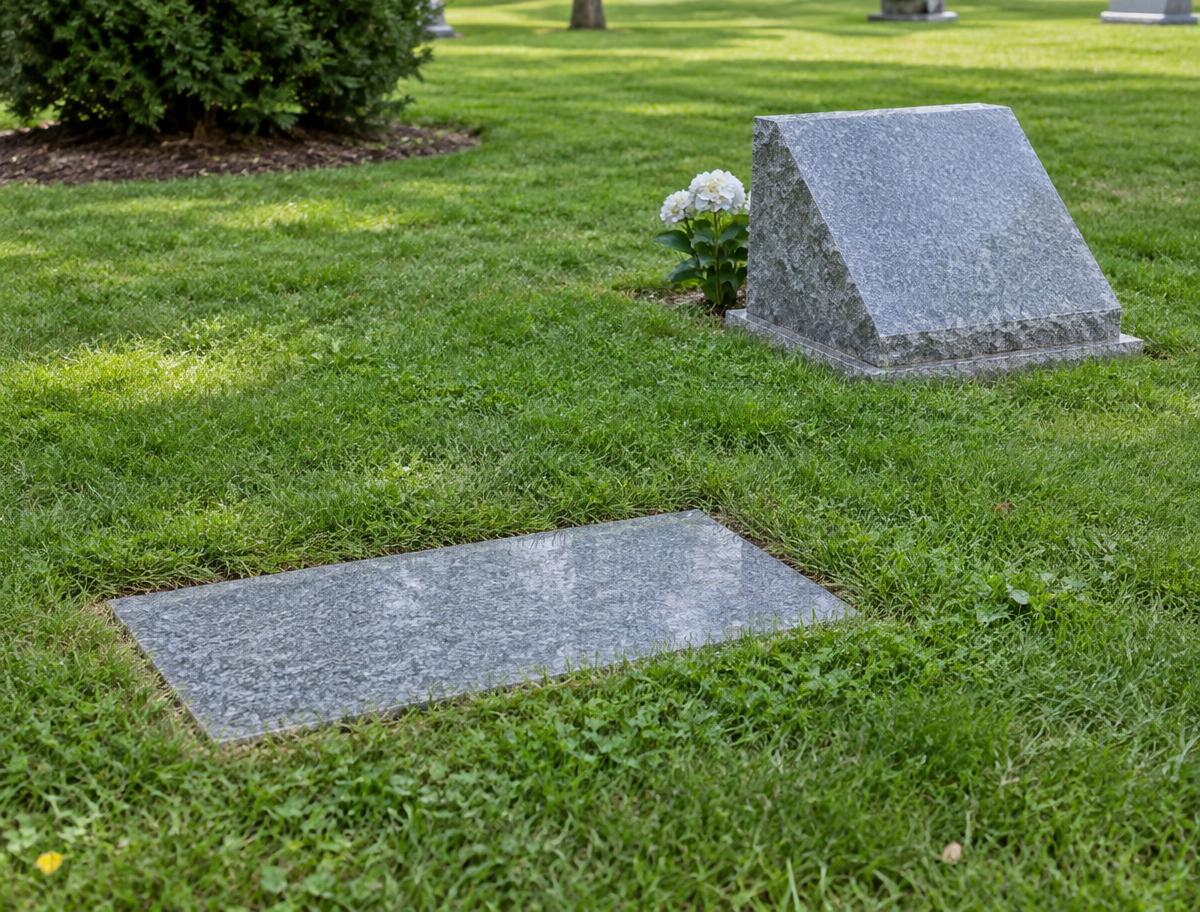
A flat granite marker sits level with or close to the surrounding grade according to cemetery requirements. It offers a restrained profile and can work well where a section prioritizes open lawn views or grounds-maintenance access. An individual marker normally serves one space; a companion marker can serve two when the property allows it. Limited surface area makes information hierarchy especially important.
A bronze marker uses a cast plaque attached to an approved granite or concrete base. Bronze and granite differ in manufacture, attachment, finish, aging, and care. Permission for a flat marker does not automatically mean both materials, any border, or any vase configuration are permitted. Confirm the plaque size, base, attachment, emblem or portrait options, border, flower vase, finished elevation, and foundation standard.

The cemetery-marker collection and companion flat-marker collection show current categories that can be discussed after the cemetery identifies the permitted material and profile.

Clear Stream Monuments | Custom Monuments in Rome, GA

Slant and bevel memorials

A bevel marker rises slightly and presents a gently angled face. A slant memorial stands higher with a more pronounced sloped inscription face and may use a separate base when approved. Both can provide greater visibility than a flush marker while remaining lower than a conventional upright. The cemetery should confirm profile, total height, base, foundation, alignment, orientation, and whether mowing or trimming clearance is required.

Clear Stream Monuments | Custom Monuments in Rome, GA

Benches, cremation memorials, and multi-piece designs

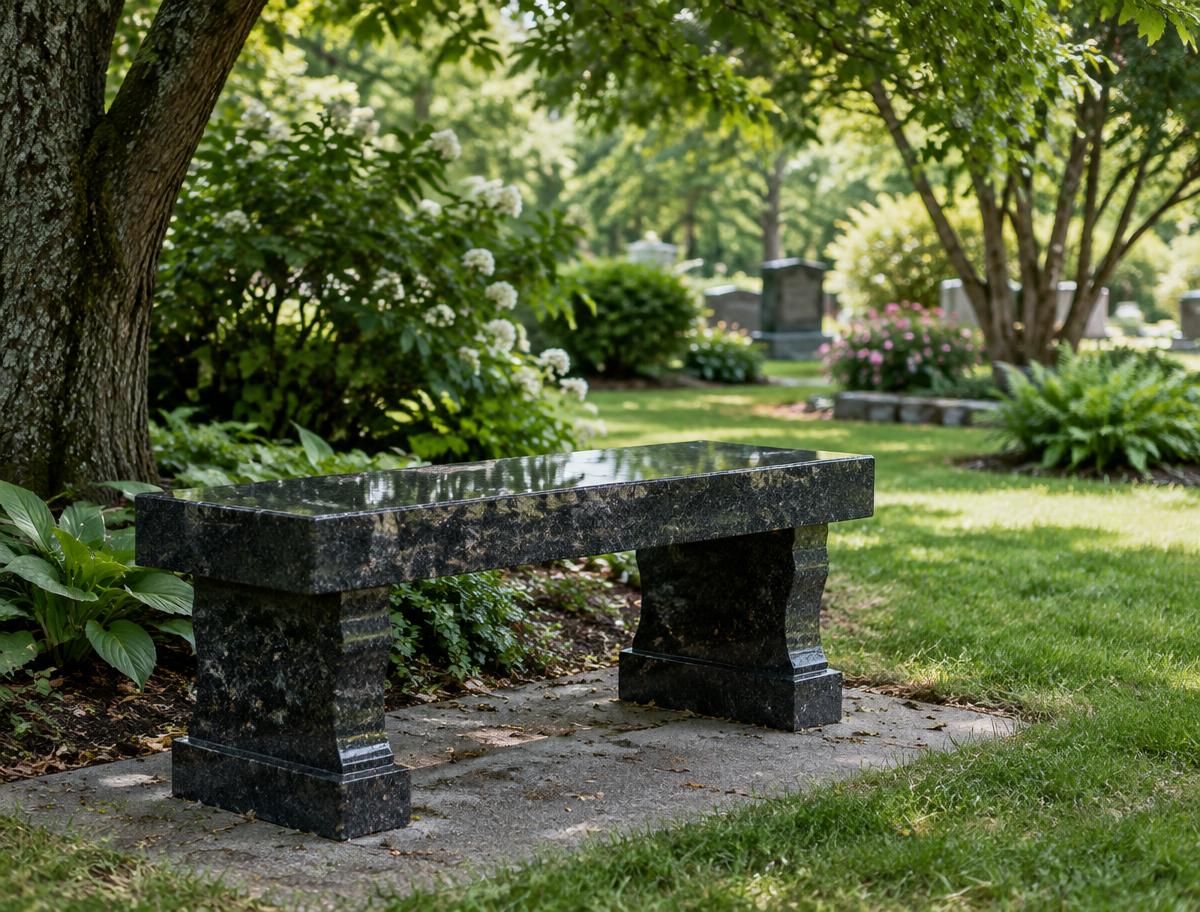
A granite bench can combine inscription space with a place to pause, and some designs may incorporate cremation niches. Separate statues, vases, wings, columns, doors, or other components can add meaning but also change weight, footprint, handling, anchoring, and maintenance. These are not default cemetery options. They require explicit approval for the exact lot and may need additional foundation, engineering, access, or installer review.

Clear Stream's memorial-bench collection provides examples of bench and cremation-bench forms. Ask the cemetery whether seating, niches, separate pieces, vases, or sculptural work are permitted before a design is quoted as an approvable cemetery memorial.

Clear Stream Monuments | Custom Monuments in Rome, GA

Customization and craftsmanship

Build a Monument Specification, Not Just a Mood Board

Inspiration photographs are helpful for discussing style, but they do not define what will be made. A permanent order needs a written specification that connects the story to physical stone, dimensions, finishes, lettering, components, and site responsibilities. That specification should stay consistent across the cemetery approval, quote, proof, production file, packing plan, and installation or freight handoff.

Granite identity and finish

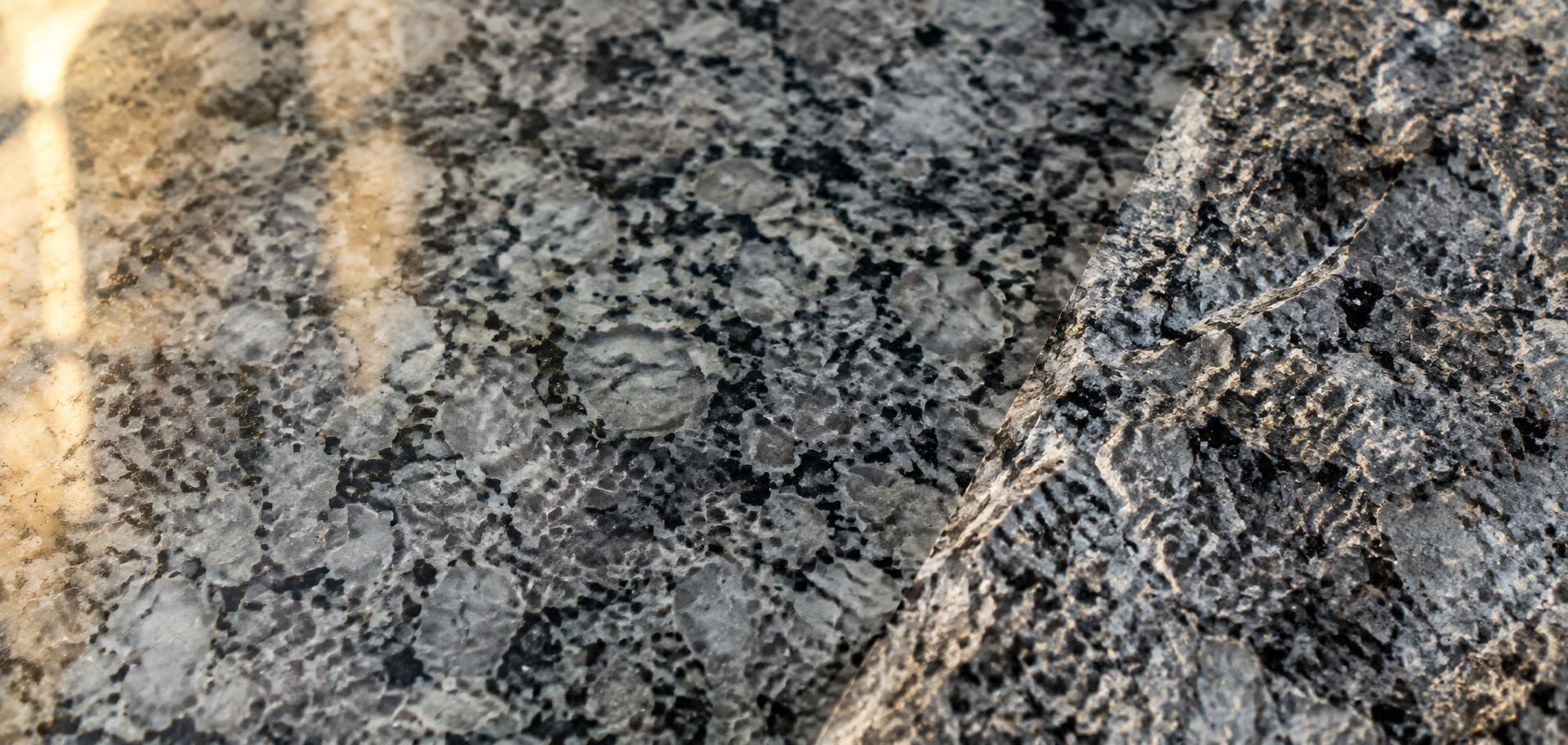
Granite is widely used for monuments because it combines structural strength, outdoor durability, and surfaces that can be carved, engraved, textured, or polished. The commercial stone name, known source, color range, grain, finish, slab availability, and suitability for the proposed lettering or portrait method should be recorded in the quote. Elberton is a major granite-manufacturing center, but that does not mean every color offered by a monument company is quarried locally. Ask for origin information when it matters to the family.

A polished face can deepen apparent color and provide a smooth field for fine imagery. A steeled or otherwise non-reflective face has a different character, while rock-pitched edges create texture. Finish changes should support the silhouette and lettering rather than reduce contrast. Natural stone can vary, so the approved description should allow for reasonable material variation while still protecting the family's chosen appearance.

Information hierarchy and permanent wording

Begin with the information that must remain unmistakable: complete names, preferred names, birth and death dates, relationship or service identifiers, and any family name shared across the monument. Then add an epitaph, quotation, scripture, symbol, or image. A custom monument does not need to carry every memory; it should select details that can be read and understood at the finished size.

Proofread against reliable records, not memory alone. Check capitalization, punctuation, suffixes, military rank, abbreviations, date format, quotation accuracy, and line breaks. When two or more people are represented, verify that the visual treatment is balanced without erasing meaningful differences between their stories.

Carving, engraving, etching, and portraits

Lettering and artwork may be produced through different processes depending on the stone, finish, depth, detail, and desired contrast. Sandblasted lettering and carving create recessed forms; laser etching can render detailed imagery on suitable dark polished surfaces; porcelain photographs are a separate applied option. Not every process suits every granite or cemetery. The proof and quote should identify the selected method, color or contrast treatment, image field, and care implications.

For a portrait, provide the highest-resolution original available. Identify the correct person, preferred crop, expression, clothing, background, direction of gaze, and details that must remain. Screenshots and compressed social-media images may limit usable detail. Ask to review how the image has been simplified for stone rather than judging only whether the source photograph is emotionally meaningful.

The Clear Stream headstone-selection guide offers an overview of monument forms, materials, finishes, laser etching, porcelain photographs, and the need to confirm cemetery rules.

Base, foundation, handling, and placement

The visible granite base and the below-grade foundation are different parts of the installation. The base supports and frames the monument; the foundation transfers the load to the ground and helps establish elevation and alignment. The cemetery or approved setter should specify foundation dimensions, material, reinforcement, cure time, finished grade, and responsibility. Do not copy a foundation detail from another property.

Large or multi-piece monuments also require a handling plan. Record individual component sizes and weights when available, lifting or setting needs, equipment route, gate and road access, overhead and side clearances, protection for turf and neighboring memorials, staging location, weather limits, and who verifies final orientation. These conditions must be assessed for the actual site.

Proof review

Review Every Detail Before Production

Names, dates, punctuation, line breaks, artwork, portrait crops, dimensions, material, finish, and included components must be reviewed against the written quote and cemetery approval before authorizing production.

Why families choose us

Why Choose Clear Stream Monuments

01

Work developed in an established monument-manufacturing community

The Elberton Granite Association traces the area's commercial granite industry to 1889, and the City of Elberton identifies the community as the Granite Capital of the World. Clear Stream's Elberton base places its work in an environment shaped by quarrying, cutting, finishing, lettering, carving, inspection, packaging, and movement of heavy memorial stone. For a family, that context matters only when it is converted into careful order-specific decisions—not as a slogan or a claim that every stone is locally quarried.

02

A digital proof before permanent production

Clear Stream's published process includes a digital proof for family approval before production. The proof is a control point for names, dates, wording, artwork, portrait crop, layout, and the intended appearance. For a custom monument, it should also be checked against the approved dimensions, stone, finish, base, components, future inscription areas, and cemetery notes in the written quote.

A second family reviewer should compare the proof with source records. If the cemetery changes a dimension, the family changes wording, or the selected granite affects the artwork method, request a revised proof and updated scope. Do not approve a visual mockup that no longer matches the cemetery approval or price.

03

A process that can connect design to placement

Clear Stream can help families compare monument forms, organize personalization, and prepare a design proof. The cemetery remains the authority for what it will accept, and regional installation remains conditional. By identifying those boundaries, the family can assign each task to the party with the right authority: family for the story and approvals, cemetery for property rules, Clear Stream for the contracted memorial, and the confirmed installer or receiver for the physical handoff.

04

Inspection, crate-and-pallet preparation, and insured freight

Clear Stream's current product pages describe quality inspection and monuments secured in a wood crate on a pallet for shipping. Its warranty page states that shipped products are insured and that the receiver must inspect for missing items or visible damage before signing. Those details matter because a heavy custom monument cannot be treated like a parcel left at an unattended address. The receiving location needs appropriate equipment, an informed person present, and a plan for safe storage until setting.

Regional service described without a false local presence

At roughly 160 miles from Elberton in the project workbook, Rome is neither presented as a local storefront nor treated as an automatic installation route. Clear Stream may be able to provide regional installation by arrangement for a qualifying project. When that is not confirmed, free insured freight can be directed to an approved attended receiver and the family or cemetery coordinates a qualified local setter. This clarity lets the family compare a real scope instead of relying on vague promises.

The process

The Rome Monument Process: Four Decision Gates

A custom monument becomes easier to manage when the project moves through decision gates. Each gate should close with a record that the family, cemetery, Clear Stream, and installer or receiver can rely on. Skipping a gate usually shifts uncertainty into a later, more expensive stage.

  1. 01

    Gate 1

    Establish the property, space, and authority

  2. 02

    Gate 2

    Define the approved monument envelope

  3. 03

    Gate 3

    Convert the story into a quote and proof

  4. 04

    Gate 4

    Produce, inspect, and execute the handoff

01

Gate 1 — Establish the property, space, and authority

  • Record the cemetery's legal name, operator, street address, office contact, section, lot, grave-space numbers, grave orientation, and the person who will identify the setting point.
  • Identify the plot owner or right-of-interment holder and the person who can sign the monument application or approve work across multiple spaces.
  • Request the current written rules for the exact section, not a general brochure or an assumption based on nearby memorials.
  • Confirm whether the project concerns a ground burial, family lot, municipal mausoleum crypt or niche, private mausoleum, or cremation memorial; each follows a different approval path.
Gate 1 closes only when the controlling authority and burial-space record are clear enough to request an approvable memorial. If the ownership or grave location is uncertain, pause design work rather than using dimensions that may later prove unusable.
02

Gate 2 — Define the approved monument envelope

  • Confirm allowed form, number of spaces served, maximum and minimum dimensions, material, color, finish, base, border, elevation, and setbacks.
  • Confirm inscription, portrait, symbol, vase, bench, statuary, cremation, future-lettering, and separate-component rules.
  • Confirm who designs and builds the foundation, who may install, what permit or credentials are required, and how final placement is approved.
  • Confirm access, work hours, advance notice, weather or grounds restrictions, receiving address, unloading equipment, storage, and inspection requirements.
Gate 2 closes with written cemetery requirements or a signed preliminary drawing. This is the point at which a catalog idea becomes a project that can be sized and priced responsibly.
03

Gate 3 — Convert the story into a quote and proof

  • Select the monument form, granite, finishes, visible base, components, lettering or image methods, inscriptions, symbols, artwork, portraits, vases, and future-information spaces.
  • Review a written quote that identifies included and excluded work, payment terms, cemetery or installer costs, foundation responsibility, regional installation or freight path, and current estimated schedule.
  • Review the digital proof against source records, the cemetery approval, and the quote. Ask another family member to perform an independent character-by-character check.
  • Request a revised proof and scope whenever a wording, artwork, dimension, material, component, or placement change affects the approved design.
Gate 3 closes only with family proof approval and a written scope that still matches the cemetery’s approval. Production should not be used to discover unresolved spelling, ownership, foundation, or receiving questions.
04

Gate 4 — Produce, inspect, and execute the handoff

  • Clear Stream produces the memorial to the approved specification and performs its stated quality review.
  • For confirmed regional installation, document permits, foundation, site readiness, equipment, travel, work appointment, weather contingencies, protection of the grounds, placement verification, and final sign-off.
  • For freight, document the approved attended receiver, unloading equipment, inspection-before-signing procedure, damage documentation, secure storage, foundation readiness, qualified local setter, and setting appointment.
  • After setting, verify identity, orientation, location, level and alignment, component condition, inscription, site cleanup, and any cemetery inspection required by the property.
Gate 4 closes when the receiving or installation record confirms that the approved memorial arrived and was placed through the agreed process. Keep the quote, proof, cemetery approval, shipping or installation documentation, and warranty information together for future lettering or service needs.

Who does what

Assign Responsibilities Before Production

A strong handoff identifies who owns each task. The roles below are planning categories, not a substitute for the final contract or cemetery rules. Put the selected assignment in writing for the specific order.

The family or authorized purchaser

  • Provides accurate names, dates, wording, artwork references, photographs, plot documents, and the correct authorized decision maker.
  • Obtains or helps obtain cemetery rules and plot-owner authorization; pays cemetery, foundation, permit, or installer fees that are outside the Clear Stream quote.
  • Reviews the quote and proof, approves permanent content, and names the person who can answer time-sensitive questions.
  • Confirms the selected receiving or installation path and keeps all records.

The cemetery or property authority

  • Verifies the property, section, lot, grave spaces, plot authority, permitted memorial form, dimensions, materials, and placement.
  • Issues applications or permits, identifies fees, states foundation and installer requirements, and defines work access and inspection procedures.
  • Confirms whether it can receive freight, unload the pallet, store the memorial, build the foundation, or provide setting; none of those services should be assumed.

Clear Stream Monuments

  • Develops the contracted monument specification, quote, and design proof from the family information and cemetery-approved envelope.
  • Produces and inspects the memorial according to the approved order and prepares it for the confirmed installation or freight plan.
  • Provides the order-specific estimate, packing or shipping documentation, and the current warranty or claims instructions applicable to the purchase.
  • Performs regional installation only when it is explicitly confirmed in the written scope.

The attended receiver and qualified setter

  • The receiver confirms the delivery appointment, unloading capacity, inspection responsibility, damage notation, and secure storage location.
  • The setter confirms cemetery approval, foundation readiness, equipment access, lifting and setting method, placement verification, cleanup, and final inspection.
  • The same organization may fill both roles, but the family should not assume that receiving a pallet includes building a foundation or setting the monument.

Checklist

Cemetery Approval and Placement Checklist

Use this list with the controlling cemetery office before approving production. Rules can vary by cemetery, section, lot type, purchase date, number of spaces, and memorial form. Written answers are more reliable than assumptions based on nearby stones.

Property and authorization

  • Cemetery legal name, operator, office contact, physical address, section, lot, grave-space numbers, grave orientation, and setting-point verifier.
  • Plot owner or right-of-interment holder, authorized purchaser, required signatures, death certificate or other records, and authority for work across more than one space.
  • Current monument application, review process, approval expiration, permit, fee schedule, and any required shop drawing or proof.

Memorial form and dimensions

  • Allowed type: upright, companion, family monument, slant, bevel, flush granite, bronze-on-base, ledger, bench, cremation memorial, private mausoleum, or another specified form.
  • Maximum and minimum tablet, marker, base, border, overall footprint, height, thickness, setback, finished elevation, alignment, and number of spaces served.
  • Approved granite or bronze specifications, colors, sources if regulated, polished or textured areas, edge treatments, plaque attachment, and separate components.
  • Rules for epitaphs, language, symbols, military or organizational emblems, custom artwork, portraits, laser etching, porcelain photographs, vases, statuary, seating, and future inscriptions.

Foundation, installer, and site

  • Foundation provider, dimensions, material, reinforcement, depth, cure period, finished grade, drainage approach, and inspection responsibility.
  • Approved installer list or credential requirements, liability insurance, permit, bond if any, work hours, advance notice, check-in, and final sign-off.
  • Road and gate width, turning area, equipment route, slope, soft ground, overhead and side clearances, neighboring memorial protection, staging area, and restoration expectations—verified onsite by the responsible setter.
  • Seasonal closures, wet-ground restrictions, funeral conflicts, preservation controls, or property-specific conditions that may affect the setting appointment.

Delivery and receiving

  • Complete receiving address, named contact, appointment process, business hours, phone number, and whether the location accepts heavy palletized memorial freight.
  • Forklift, loading dock, lift-gate, crane, or other unloading requirements appropriate to the shipment; do not assume the carrier unloads to the grave.
  • Person authorized to inspect before signing, condition-report and photography procedure, where damage is noted, who contacts Clear Stream, and the current claim deadline.
  • Secure, level storage area, protection from equipment or weather-related hazards, component inventory, and responsibility for movement from storage to foundation.

Timing and logistics

Timing and Logistics: Follow the Critical Path

A custom monument schedule is controlled by dependencies, not by road mileage alone. The order cannot move responsibly through design, production, delivery, and setting until the cemetery's requirements, family approval, material availability, and handoff responsibilities are clear. Ask for a current order-specific estimate after those facts are known.

Approval and design time

Locating plot records, securing signatures, obtaining cemetery specifications, and receiving a formal approval can take longer than expected. Design time also varies with the number of family decision makers, portrait or custom-art preparation, revisions, and whether a companion or family monument reserves future information. The family can reduce preventable delay by sending complete, legible records and consolidating feedback into one response.

Production is product-specific

Production time depends on the selected memorial. Granite availability, size, custom shape, multiple components, carving, artwork, portrait method, proof revisions, workload, quality review, and other order details can change the estimate. Clear Stream provides a written estimate for the selected memorial and explains what starts the clock.

Production, freight, cemetery scheduling, foundation curing, and installation are separate stages and are not combined into one guaranteed date.

Regional installation must be scheduled as its own scope

If Clear Stream confirms regional installation, the installation date depends on cemetery approval, permit status, foundation responsibility and cure, component weights, travel and equipment plan, site access, ground and weather conditions, cemetery work windows, and other scheduled services. The approximately 160-mile drive context does not establish availability, same-day service, or a completion date. The written scope should state who handles each dependency and what can cause rescheduling.

Freight requires an attended receiving plan

If the project uses free insured shipping instead of confirmed Clear Stream installation, select the receiver before the shipment is released. Clear Stream's public guidance says someone must be present to receive and inspect a memorial and that unattended cemeteries cannot accept its deliveries. The receiver should know the shipment size and weight, provide suitable unloading equipment, inspect the crate and components before signing, photograph any concern, and follow the current damage-reporting instructions.

Review the current return, warranty, and shipping-damage terms before shipment. The current policy requires inspection before signing and sets a time window for contact and carrier claims; confirm the controlling terms for your order before delivery.

Foundation and cemetery scheduling continue after arrival

Freight arrival is not cemetery placement. The local setter may need an approved drawing, permit, foundation appointment, cure time, site check, equipment access, and cemetery work slot. The family should not ask the receiver to move the monument to the grave unless that service is explicitly included and authorized. Keep the stone secured until the approved setter and cemetery are ready.

Questions

Frequently Asked Questions

Do you install headstones or monuments in Rome, GA?
Regional installation may be available by arrangement for a qualifying Rome project. Clear Stream must confirm the memorial, cemetery approval, foundation, component weights, equipment access, work rules, schedule, travel, and site conditions before installation is included. If Clear Stream installation is not confirmed in writing, the memorial can be shipped free and insured to an approved attended receiver, and the family or cemetery coordinates a qualified local setter. This is not routine local or same-day service.
Does Clear Stream Monuments have a Rome office or showroom?
No verified Rome office or showroom is claimed. Clear Stream Monuments is based in Elberton, Georgia. Families can discuss the cemetery, memorial form, inscriptions, artwork, quote, proof, shipping, and possible regional installation without representing the company as locally located in Rome.
Who approves a monument for a City of Rome cemetery?
The City of Rome Cemetery Department is the municipal contact for Myrtle Hill, Oak Hill, Eastview, Oakland, and the Myrtle Hill Mausoleum. Its public page identifies grave-marker requirements and records among its services. Contact the Department for the current requirements tied to the exact property, section, lot, and interment type. For a private, church, or family cemetery, use that property's own authority instead. Start with the official Cemetery Department page.
Can I order a custom monument for Myrtle Hill Cemetery?
Possibly, but the historic setting and the presence of many existing memorials do not prove that a particular design is allowed today. Ask the City Cemetery Department for the current section-specific form, dimensions, material, base, foundation, installer, access, and application requirements. Clear Stream should prepare a final quote and proof only after the approved envelope is known.
Is a space in the Myrtle Hill Mausoleum the same as ordering a private family mausoleum?
No. The City-operated mausoleum provides municipal crypt and niche spaces under the City's rules. A private family mausoleum is a separate structure requiring explicit cemetery permission, a dedicated site, dimensions, foundation or engineering requirements, delivery access, and an approved installation plan. Confirm which type of memorialization the family is considering before requesting a design.
Can one custom monument honor a couple or an entire family?
Yes, a companion or family monument can be designed when the cemetery permits it and the family controls the required spaces. Confirm the grave arrangement, base and foundation footprint, future burials, individual-marker plan, and authority for later inscriptions. The proof should reserve future names or dates deliberately and document how later work can match the original design.
Can we add portraits, symbols, or custom artwork?
Many monument designs can include inscriptions, faith or service symbols, floral work, scenes, etched portraits, or porcelain photographs. Suitability depends on the granite, finish, available area, production method, source-image quality, and cemetery rules. Provide the best original image available and confirm any permission required for military, organizational, or copyrighted marks. You will review a digital proof before approved production.
How long does a custom monument take?
The schedule depends on cemetery approval, family decisions, granite and component availability, design complexity, proof revisions, production workload, quality review, shipping or travel, foundation readiness, and cemetery scheduling. Clear Stream's public pages currently show broad ranges for certain in-stock and custom categories, but those are not a fixed Rome promise. Request a written estimate for the selected memorial and confirm what event starts the estimate.
Can the monument be shipped directly to the cemetery?
Only if the cemetery agrees to receive heavy palletized freight, can provide a named attendant and suitable unloading equipment, and will inspect before signing. Clear Stream says it cannot deliver to unattended cemeteries. A monument setter, funeral home, or other approved commercial location may be a better receiver, but the family must confirm that the location accepts the responsibility. Delivery to a receiver does not automatically include foundation or installation.
Who builds the foundation and sets the monument?
That depends on the cemetery and the written service scope. Some cemeteries control foundations or setting; others allow an approved monument installer. Clear Stream may handle regional installation only when confirmed. Ask the cemetery who is authorized, what foundation specification applies, what fees or permits are required, and who inspects final placement before production begins.
What should we send for a useful quote?
Provide the cemetery's legal name and contact, section and grave-space information, written monument rules, plot-owner authorization status, desired memorial form, number of people or spaces represented, exact names and dates, proposed epitaph, artwork or portrait files, granite and finish preferences, vase or future-lettering needs, desired timeframe, and the expected installation or freight receiver. Missing information can be identified during the consultation, but the final quote should not rely on guesses.

Begin the conversation

Request a Free Rome Monument Consultation

You do not need to resolve every design detail before reaching out. Begin with the cemetery name, section and grave information, the person authorized to approve the memorial, any written rules you already have, the number of people or spaces the monument should serve, and the words or images that feel essential. Clear Stream can help organize those facts into an option that is meaningful and capable of being reviewed by the cemetery.

When you are ready, request a free design consultation or quote. Ask the team to state the exact monument, dimensions, granite, finishes, personalization, foundation responsibility, regional-installation or freight path, exclusions, current estimate, and proof-approval process in writing. That clarity gives your family time to make a permanent choice with care.
Chat
Chat with us 👋