◷ Mon- Fri 8:00 AM – 5:00 PM 

  Free Shipping
Clear Stream Monuments | Custom Headstones in Lawrenceville, GA
Clear Stream Monuments • Lawrenceville, Georgia

Custom Headstones in Lawrenceville, GA, Planned Around Cemetery Approval

A headstone begins with the family’s memories, but it also has to fit a precise cemetery space. Clear Stream helps Lawrenceville families coordinate the cemetery requirements, memorial design, proof, granite production, inspection, and delivery or installation planning.
Elberton, Georgia granite workshop • Approximately 72 miles from Lawrenceville. Geographic context only — not a delivery or installation time.

The Real Difference

Build the Cemetery Specification Before the Stone

The best memorial design begins with the space where it will stand.

The tablet, base, inscription, foundation, finished height, and setting plan must agree with the rules for the exact section and plot. Clear Stream Monuments helps Lawrenceville families turn those separate decisions into one coordinated headstone specification, then carries the approved design through proofing, granite production, inspection, and a confirmed delivery or installation plan.

Clear Stream is based at its granite workshop in Elberton, Georgia. There is no verified Lawrenceville office or showroom. The project workbook places Lawrenceville approximately 72 miles, or roughly one hour and 35 minutes, from the workshop. That proximity supports a local-service conversation, but it is not a promise of immediate delivery or placement. Local installation is available only for qualifying projects after Clear Stream confirms the cemetery, approved memorial form, foundation responsibility, access, equipment needs, schedule, and site conditions.

This page is meant to help a family make a durable decision, not simply choose a shape from a catalog. It explains how upright and companion headstones differ, how inscription space should be planned, when a granite memorial bench may be a better secondary path, what to ask a Lawrenceville-area cemetery, and how to keep approvals aligned from the first conversation through final placement.

Step One

Build the Headstone Specification Packet First

The most useful first deliverable is not simply a rendering. It is a concise specification packet identifying the burial property, governing section, approval authority, physical envelope, foundation responsibility, and required paperwork. With that packet in hand, design discussions become concrete.
01

Identify the Exact Authority

Record the property's legal cemetery name and street address, the operator, the section, lot and grave identifiers, the plot owner or interment-right holder, and the title of the person who can approve an outside memorial. Ask that person for rules covering the exact section, not a general brochure.
02

Define the Design Envelope

Ask for maximum and minimum tablet dimensions, base dimensions, total height, thickness, setbacks, spacing, orientation, finish requirements, vase and accessory rules, and foundation detail. "Uprights are allowed" does not answer whether the proposed width, projection, carving, or portrait is accepted.
03

Assign Responsibility

Name who supplies plot documents, confirms spelling, approves the proof, secures cemetery permission, prepares the foundation, receives the memorial, provides unloading equipment, sets the stone, restores the site, and reports completion.
04

Keep Every Document Aligned

The cemetery rule sheet, written quote, dimensioned proof, and installation scope should describe the same memorial. If size, shape, base, inscription, artwork, finish, vase, or setting method changes, pause and determine whether the cemetery and quote must be reapproved.

Approval Reality

A Lawrenceville Address Does Not Create One Universal Cemetery Rule

Burial properties may be municipal, private, religious, association-managed, family-owned, or located outside the incorporated city even when the family thinks of the location as Lawrenceville. Identify the actual cemetery operator and obtain current, section-specific written requirements before a design is treated as installable.

A nearby memorial is useful for visual context but not as proof of a current rule. It may have been installed under an earlier policy, in another section, or through a special approval.

Design from the cemetery's written requirements — not from a neighboring memorial.

Ask whether the property requires its own application, dimensioned drawing, installer credentials, proof of insurance, setting fee, permit, or plot-owner signature — and whether foundation or setting work is reserved to its own crew.

Why Choose Clear Stream Monuments

Craft Context, Controlled by the Order in Front of Us

01

Elberton Craft Context

Elberton's granite industry is documented back to 1889, when the area's first commercial quarry and manufacturing plant opened, and the Elberton Granite Association describes the community's continuing heritage as the Granite Capital of the World. Clear Stream works from that granite-manufacturing community, where proportion, surface finish, lettering, carving, and safe handling are practical craft decisions. That heritage should not be used to imply that every granite choice has the same source, appearance, grain, or performance — the commercial name, color range, finish, availability, and known origin of the selected stone belong in the written scope.

02

Proof-Centered Process

The digital proof should be treated as the family's control document. It should show overall dimensions, the tablet and base relationship, exact inscription, spelling, dates, line breaks, symbols, artwork, portrait placement if used, polished or textured areas, and any future inscription fields. Compare that proof with the cemetery approval and the quote instead of reviewing it only as a picture. Production should begin only from a clearly identified final version.

03

Order-Specific Planning

The actual memorial must be matched to the approved cemetery form, the foundation, the inscription, and the installation scope. Planning categories on this page are a starting framework; cemetery approval remains controlling, and each decision should be recorded so the next person in the process can rely on it.

04

Inspection & Delivery Planning

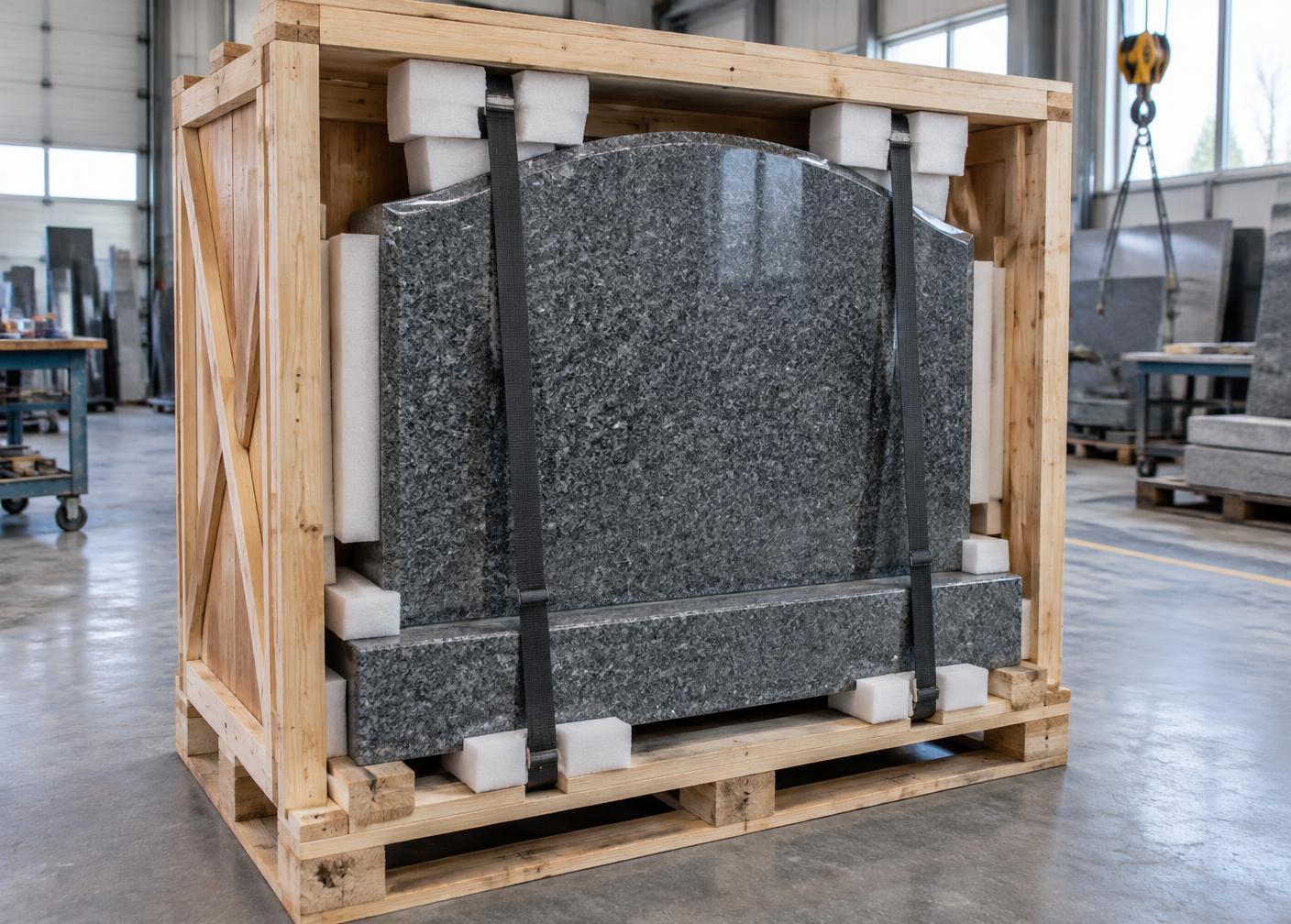
Clear Stream publishes that memorials are inspected before shipping and that shipped products are insured. A useful order plan therefore covers both the finished memorial and the receiving event: what will be inspected, how the memorial will be packaged, the delivery destination, who will be present, what unloading capability is required, and who will document condition before signing. The actual receiving and claim process must be confirmed for the order.

Headstone Forms

Choose by Visibility, Space, and Future Use

The primary decision is not which headstone looks most impressive in isolation. It is which form fits the cemetery envelope, supports the intended inscription, and can be founded and maintained appropriately at the plot.

Individual Upright Headstones

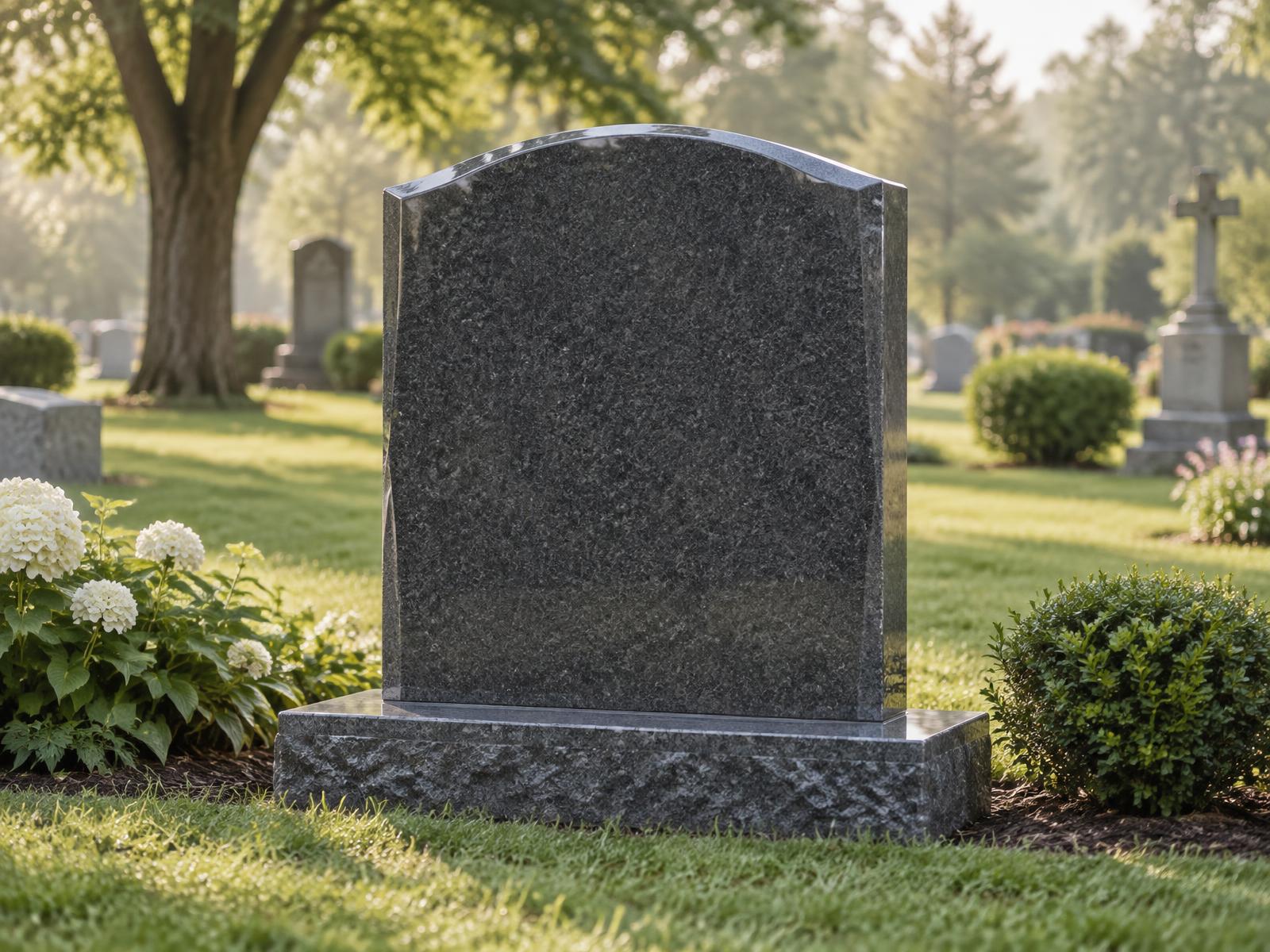
A vertical tablet seated on a base makes names and dates easier to locate from a distance and can provide room for an epitaph, symbol, scene, or portrait when the approved dimensions support those elements. Tablet and base should be designed together: a broad or tall face may require a correspondingly approved base and foundation, and the cemetery may limit overall height, edge projection, shape, or finish. Ask the designer to show the real inscription area inside the border and carving — not merely the overall stone width.

Explore Upright Headstones

Companion Headstones

A companion headstone can bring two lives into one coherent composition, but it also requires more plot and inscription planning. Confirm that the family controls the adjoining spaces and that the cemetery permits a shared base across them. The proof should show how individual names, dates, personal symbols, and shared text relate. If one date or inscription will be completed later, reserve a field with adequate clearance from polished edges, artwork, lettering, and structural joints, and ask who may perform that future work.

Family & Custom Monuments

A larger family monument, custom silhouette, cross, columned composition, or sculptural element can create more storytelling space, but it increases the importance of plot rights, scale, foundation, equipment access, and cemetery permission. Evaluate the design from the family's normal viewing approach as well as from a close proof. Before requesting a complex design, send the cemetery envelope and the number of owned spaces.

Explore Custom Work

Slant & Bevel Forms

Where permitted, a slant or bevel form may offer an angled inscription face with a lower profile than a full upright, using a different footprint and support condition. Ask the cemetery whether it classifies the proposed form separately, whether a base is required, how finished elevation is measured, and who prepares the foundation. A lower profile does not mean fewer approvals, and the usable inscription field can be smaller than the overall stone.

Flat Granite Markers

A compact horizontal memorial can be appropriate where the cemetery requires a low profile or the family prefers a simpler form. It offers less vertical visibility and usually a different inscription area, so wording or artwork may need simplifying. The cemetery must approve exact length, width, thickness, finished elevation, foundation or setting bed, and orientation. On this page, flat markers are a supporting comparison rather than the main product focus.

Clear Stream Monuments | Custom Headstones in Lawrenceville, GA
  • TABLET
  • BASE
  • LETTERING
  • ARTWORK
  • FINISH
  • FOUNDATION
  • Granite & Personalization

    Design the Tablet, Base, and Inscription as One System

    The tablet's height and width establish the usable inscription field, the distance from lettering to edges, the relationship between artwork and names, and the visual weight carried by the base. A proportion study should show the front elevation with dimensions and major content blocks before fine decoration is added.

    The base should not be treated as a generic platform selected at the end. Its length, width, thickness, finish, and projection may be governed by the cemetery, and it transfers the tablet load to the foundation. If a vase or accessory is proposed, show it in the plan and confirm whether it changes the approved footprint or maintenance clearance.

    Start an inscription worksheet separate from the artwork listing every name, nickname, date, relationship line, epitaph, symbol, translation, and punctuation mark exactly as it should appear. The family should read the proof character by character, preferably with a second family member, comparing it to source documents.

    Engraving, laser etching, polished finishes, and custom artwork are all published options for upright memorials. Suitability depends on the selected granite, tonal contrast, source-image quality, desired detail, surface finish, and cemetery rules. The monument professional should approve the production method for the selected stone rather than inferring a result from a mockup.

    Clear Stream Monuments | Custom Headstones in Lawrenceville, GA

    Secondary Memorial Form

    Memorial Benches: A Different Kind of Family Decision

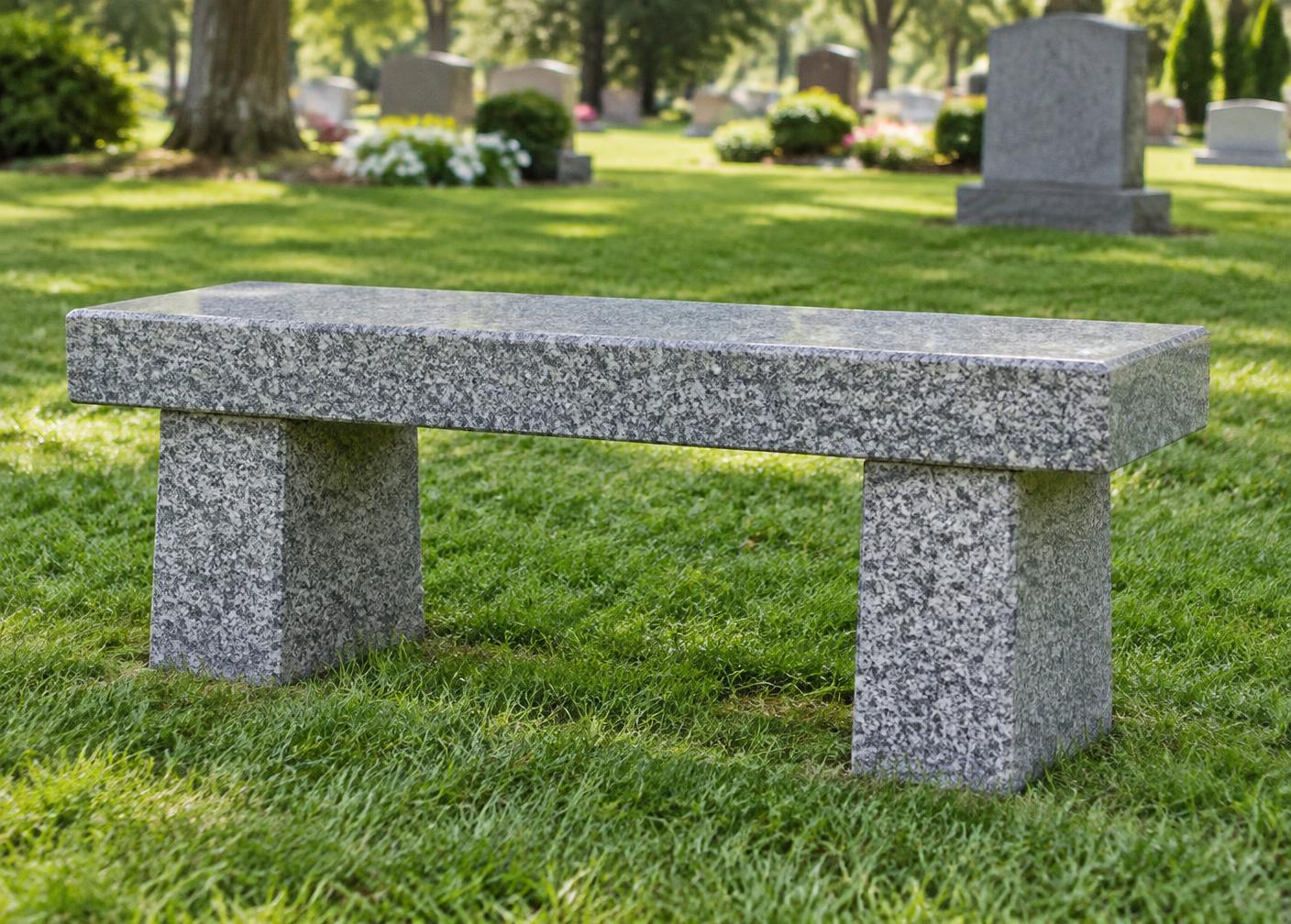
    The current collection verifies granite benches with flat seats, curved backs, carved details, and cremation-bench forms. A bench should not be treated as an accessory added after the headstone is approved. It is a separate memorial form with its own approval path.

    Explore Memorial Benches
    01

    Purpose

    A bench can create a place to pause and visit as well as a surface for remembrance. It may suit a family area where the cemetery has specifically approved that form, and it can provide additional inscription space.
    02

    Footprint & Foundation

    Request a dimensioned plan showing the full footprint, supports, seat and back, foundation, inscription faces, approach clearance, and relationship to the headstone and plot boundaries. A headstone foundation should not be assumed extendable or reusable for a bench.
    03

    Separate Approval

    A bench should receive its own proof and scope identifying dimensions, component arrangement, finish areas, foundation assumptions, delivery destination, unloading plan, and setter. If a headstone and bench are ordered together, each still needs a distinct approval record.
    Lawrenceville Context

    Lawrenceville Planning, With the Right Local Context

    72 miles
    Approximately 1 hr 35 min from the Elberton workshop
    Not production time
    Not freight transit time
    Not a delivery date
    Not a crew travel guarantee
    Not an installation guarantee
    The figure is a city-to-workshop measurement, so a family’s cemetery may be closer or farther. The operational route should be calculated from the exact workshop origin to the cemetery entrance before transport or installation is quoted, and the actual burial-property address, route, receiving conditions, and scope must be confirmed for the order.

    The Historic Cemetery is context, not a rulebook

    The City of Lawrenceville’s official visitor page places the Lawrenceville Historic Cemetery about a half-mile from the downtown square between East Pike Street and Highway 29. It identifies burials connected with Gwinnett County’s founders and Lawrenceville’s first mayor, and notes both marked and unmarked historic graves. That gives the city a real memorial-landscape context and underscores why work near historic burials requires careful authority and location verification.
    That visitor page does not establish current interment availability, monument approval, outside-installer acceptance, rules for other cemeteries, or any Clear Stream relationship. Municipal maps and GIS resources can help confirm location and jurisdiction, but a map is a starting point, not monument approval — a Lawrenceville postal address may fall outside the municipal boundary.

    ImportantAlways confirm the actual cemetery, section, operator, and written memorial rules.

    Ordering Process

    The Plot-to-Proof Ordering Process

    A clear process keeps the family from making the same decision several times. Each stage should produce a record the next person can rely on. The exact operational steps should be verified for the order.
    1. 01

      Start With the Family Brief

      Record the person being honored, whether the memorial is individual or shared, the desired tone, the essential inscription, meaningful symbols or images, the preferred viewing experience, and any future inscription needs. Separate confirmed facts from ideas still under discussion.

    2. 02

      Build the Cemetery Specification Packet

      Obtain the legal property name, address, operator, section, lot and grave identifiers, plot rights, memorial category, dimensions, base and foundation rules, finishes, accessories, fees, installer requirements, work hours, access rules, delivery instructions, and approval contact.

    3. 03

      Select a Form Inside the Approved Envelope

      Compare individual upright, companion, custom upright, slant or bevel, and a compact flat granite alternative only if each is permitted. A memorial bench should be treated as a separate approval path rather than assumed to share the headstone footprint.

    4. 04

      Choose Granite and Finish

      Confirm the commercial stone name, color range, known source, grain, finish areas, edge treatment, lettering or image method, current availability, and how natural variation will be handled. Do not assign an unsupported grade or origin.

    5. 05

      Prepare the Written Quote & Responsibility Matrix

      The scope should identify dimensions, components, inscription allowance, artwork, proof revisions, cemetery paperwork, foundation, transport, receiving, setting, fees, exclusions, change procedure, payment milestones, and the person responsible for each handoff.

    6. 06

      Review the Dimensioned Digital Proof

      Compare it with the inscription worksheet, cemetery approval, and quote. Check every letter, number, date, line break, relationship word, symbol, image, finish, component dimension, orientation, future field, and proof version. Obtain renewed approval after any material change.

    7. 07

      Release Production From the Final Approved Record

      Confirm that the order file, proof, stone selection, artwork, cemetery conditions, and service scope agree. The family should retain a copy of the version released to production.

    8. 08

      Inspect, Receive, and Place Under the Confirmed Plan

      Verify completion against the approved proof, document packaging and condition at delivery, follow the current damage-report process before signing, and use the authorized foundation and setting method. Record final placement and any cemetery acceptance evidence.

    Ask in Writing

    Cemetery Approval & Placement Checklist

    Ask the cemetery or controlling authority to confirm the following in writing. Rules can vary by property and by section, and a verbal answer should be followed by the required application or drawing approval.

    Property Identity

  • Legal cemetery name, street address, and operator
  • Section, lot, and grave number
  • Plot owner or rights holder
  • Authorized approval contact
  • Memorial Form

    • Whether an individual upright, companion upright, custom silhouette, slant, bevel, flat granite marker, or bench is allowed on the owned space

    Dimensions

  • Permitted tablet height, width, and thickness
  • Base length, width, and thickness
  • Total height and footprint
  • Setbacks, spacing, and orientation
  • Foundation

  • Required size, depth, material, and reinforcement
  • Finished elevation and curing expectation
  • Drainage detail
  • Responsible party
  • Granite & Finishes

  • Permitted materials and any color limitations
  • Polished or textured surfaces and edge treatment
  • Lettering or image restrictions
  • Maintenance rules
  • Accessories

    • Whether vases, portraits, emblems, photographs, lights, flower receptacles, or temporary decorations are permitted, and where

    Authorization

  • Plot-owner consent and next-of-kin signature
  • Interment-right documentation
  • Permit, application, or dimensioned drawing
  • Proof or committee review
  • Outside Provider Requirements

    • Whether an installer must submit insurance, licensing, registration, work history, appointment information, or a setting plan

    Fees

    • Application, permit, foundation, inspection, setting, perpetual-care, delivery, or storage charges
    • The party who pays each one

    Site Identification

  • Who locates the exact setting point
  • Who confirms plot boundaries
  • Utilities or protected areas
  • Nearby or unmarked burials
  • Access

  • Gate dimensions and road limits
  • Equipment and ground-protection rules
  • Work hours and weather closures
  • Escort needs and seasonal conditions
  • Receiving

  • Whether the cemetery accepts shipments
  • Whether an appointment and staff receiver are required
  • Unloading method and inspection procedure
  • Temporary storage rules
  • Installation

  • Who prepares the foundation
  • Who transports the memorial within the property
  • Who sets and aligns it
  • Who restores the grounds, cleans the stone, and obtains final approval
  • Future Work

    • Who may add a later date or inscription
    • Whether the cemetery must approve that work
    • How access and finish matching will be handled

    Need Help Organizing the Requirements?

    Request a Free Design Consultation
    Installation Readiness

    Four Conditions Must Align

    01

    The Memorial Matches the Released Proof

    Before transport, confirm the finished components, dimensions, inscription, dates, artwork, finish, base, accessories, and condition against the approved record. Photograph the memorial and packaging. If any change was made during production, resolve the documentation before the stone moves.
    02

    The Foundation and Setting Point Are Ready

    Confirm that the cemetery has marked the correct location, the foundation matches the approved dimensions and elevation, required curing or inspection is complete, drainage concerns are addressed, and the site can support the planned equipment. A memorial being finished does not make the ground ready.
    03

    The Route, Crew, and Cemetery Appointment Are Confirmed

    Conditional local installation means the project must be scheduled with the actual scope: permitted work window, gate and road conditions, equipment limits, receiver or escort, crew access, unloading location, restoration expectations, who photographs completion, and who can accept the work.
    04

    The Family Understands What Is and Is Not Included

    The final scope should distinguish the memorial price from cemetery fees, permits, foundation work, site preparation, transport, installation, future lettering, and optional accessories, and identify the process for damage, workmanship concerns, order errors, or a family-requested change.
    A finished memorial is not automatically an installation-ready memorial.
    Timing & Logistics

    Timing and Logistics Without False Certainty

    A memorial schedule depends on more than fabrication. Cemetery review, proof revisions, granite and finish availability, artwork preparation, production, quality inspection, foundation readiness, weather, access, delivery appointment, and setter scheduling may each affect the date. Ask for a current qualified range for the specific approved design, with the assumptions behind it, and update it when a dependency changes.
    1. Cemetery Packet
    2. Quote
    3. Proof
    4. Production
    5. Inspection
    6. Receiving
    7. Installation
    Families planning an unveiling or anniversary should wait for confirmed placement before announcing a fixed event date. The current production, delivery, foundation, and installation planning range must be confirmed in writing for the specific Lawrenceville order.
    Clear Stream Monuments | Custom Headstones in Lawrenceville, GA
    Receiving & Delivery

    Plan the Receiving Route Before the Stone Ships

    Current guidance is that someone must be present to inspect and receive a shipment, and that inspection happens before signing. Confirm the approved destination and whether it has the equipment and personnel to unload the packaged memorial safely. An unattended cemetery is not an acceptable assumption for freight delivery; if the cemetery cannot receive, arrange another approved commercial or installer destination in writing.

    At delivery, compare the shipment to the paperwork, inspect the crate or pallet and visible components, photograph all sides, note missing items or visible damage before signing, and confirm who stores the memorial securely and transfers it to the authorized setter.

    Delivery ≠ Cemetery Placement. Delivery means the memorial reaches the approved receiving party. Placement means the correct stone is set on the approved support by an authorized party. The two events may occur on different days.

    Questions Families Ask

    Frequently Asked Questions

    More general answers are available on the Clear Stream FAQ.

    Local installation is available for qualifying Lawrenceville-area projects, but it is not automatic. Clear Stream must confirm the exact cemetery, approved memorial, foundation responsibility, permits or fees, access, equipment, schedule, weather, and site conditions. Clear Stream is based in Elberton and does not have a verified Lawrenceville office or showroom. Ask for the confirmed service scope in writing before assuming that foundation work, transport, setting, or cemetery charges are included.

    Contact the owner or operator of the exact burial property and ask for current rules for the section, lot, and grave space. A Lawrenceville address does not create one citywide rule, and the official Historic Cemetery visitor page is not a monument-rule sheet. Request permitted form, dimensions, base, total height, foundation, finishes, accessories, plot authorization, application, fees, outside-installer requirements, delivery instructions, and the name of the person who can approve the dimensioned proof.

    It may be possible only if the family holds the necessary rights and the cemetery approves a shared memorial across those spaces. Confirm the exact lot arrangement, tablet and base limits, foundation, future interment access, name placement, and future inscription plan. The proof should show the full footprint and both personal fields. Do not order a companion width based on another cemetery or a nearby stone.

    Clear Stream's current published guidance describes confirming design details before production. For this order, require a clearly identified final digital proof and compare it with the inscription worksheet, written quote, and cemetery approval. Verify dimensions, component arrangement, spelling, dates, punctuation, line breaks, symbols, image identity, finish areas, orientation, future fields, and proof version. A changed dimension or design element may require a revised quote and renewed cemetery approval.

    Clear Stream publishes engraving, laser etching, and custom-artwork options for upright memorials. Suitability depends on the selected granite and finish, source-image quality, final image size, contrast, cemetery restrictions, and the monument professional's chosen method. Supply the best original file available and confirm permission to use it. The quote and proof should identify the method and final placement; do not assume that every image is suitable for every stone or size.

    An upright places the inscription on a vertical tablet, usually increasing visibility and providing a different design field. A flat granite marker uses a low horizontal format and may suit a section that requires or permits that profile. Each has different dimensions, support conditions, maintenance exposure, viewing angle, and inscription constraints. The cemetery's current section rules and the family's content needs should decide the form; this Lawrenceville page gives headstones the primary emphasis.

    Only if the cemetery and plot rights permit it. A bench has its own footprint, foundation, visitor clearance, access, maintenance, setting, and inscription requirements. Ask for a dimensioned plan and written approval. If it includes spaces intended for cremated remains, also confirm interment rights, capacity, access, documentation, and the authorized opening and closing procedure. Do not assume a bench can share a headstone foundation.

    That varies by cemetery and project. Some properties reserve foundation or setting work to their own crew; others permit an approved outside professional. The written scope should assign site identification, excavation, foundation specification, preparation and curing, transport, equipment, setting, alignment, turf protection, cleanup, final inspection, and fees. Conditional local installation from Clear Stream does not by itself answer every one of those responsibilities.

    There is no responsible fixed answer before the cemetery approval, proof, stone selection, production requirements, foundation, and service plan are known. Clear Stream's public pages currently show general ranges that differ by product, so obtain a current written range for the exact approved order. Proof revisions, granite availability, artwork, cemetery response, inspection, weather, access, receiving, and installer scheduling can change the plan. Do not set an unveiling date until placement is confirmed.

    Use an attended receiving appointment at a destination able to unload and inspect the packaged memorial. Compare the shipment to the paperwork, photograph the package and visible components, note missing items or damage before signing, and follow the current policy immediately. Confirm who stores the memorial and transfers it to the authorized setter if placement will occur later. Delivery to a receiving point is not the same as cemetery installation.

    Send the cemetery's legal name and address, operator and approval contact, section and plot identifiers, current written rules, allowed headstone and base dimensions, foundation and installer requirements, a family inscription worksheet, preferred headstone form, any artwork or portrait files, desired granite or finish if known, receiving details, and the primary family contact. Identify unresolved items instead of guessing. A useful quote should also show what is excluded and who handles cemetery fees, foundation, delivery, and setting.

    Verification

    Verified Business, Warranty, Review & Authorship Details

    Clear Stream does not publish a rating, review count, testimonial, credential, years-of-experience statement, granite-origin claim, product availability promise, or warranty summary on this page unless it is current and documented. Business address, phone number, warranty terms, customer review links, and the name and role of the monument professional who reviewed this page are displayed only after verified values are confirmed against company records.

    Until then, the most reliable path is a direct conversation about your specific cemetery and plot. Published customer feedback can be reviewed on the Clear Stream testimonials page.

    Clear Stream Monuments | Custom Headstones in Lawrenceville, GA

    Request a Free Lawrenceville Headstone Design Consultation

    You do not need to arrive with a finished design. Start with the cemetery name, current written requirements, plot information, the approved memorial category, the names and dates the family has verified, inscription ideas, photographs, and any timing considerations.
    Clear Stream can help organize those inputs into an appropriate headstone direction, identify unanswered approval questions, prepare a design direction, and provide a written quote. The project should move to production only after the family, cemetery, quote, proof, and service plan describe the same memorial.
    Chat
    Chat with us 👋