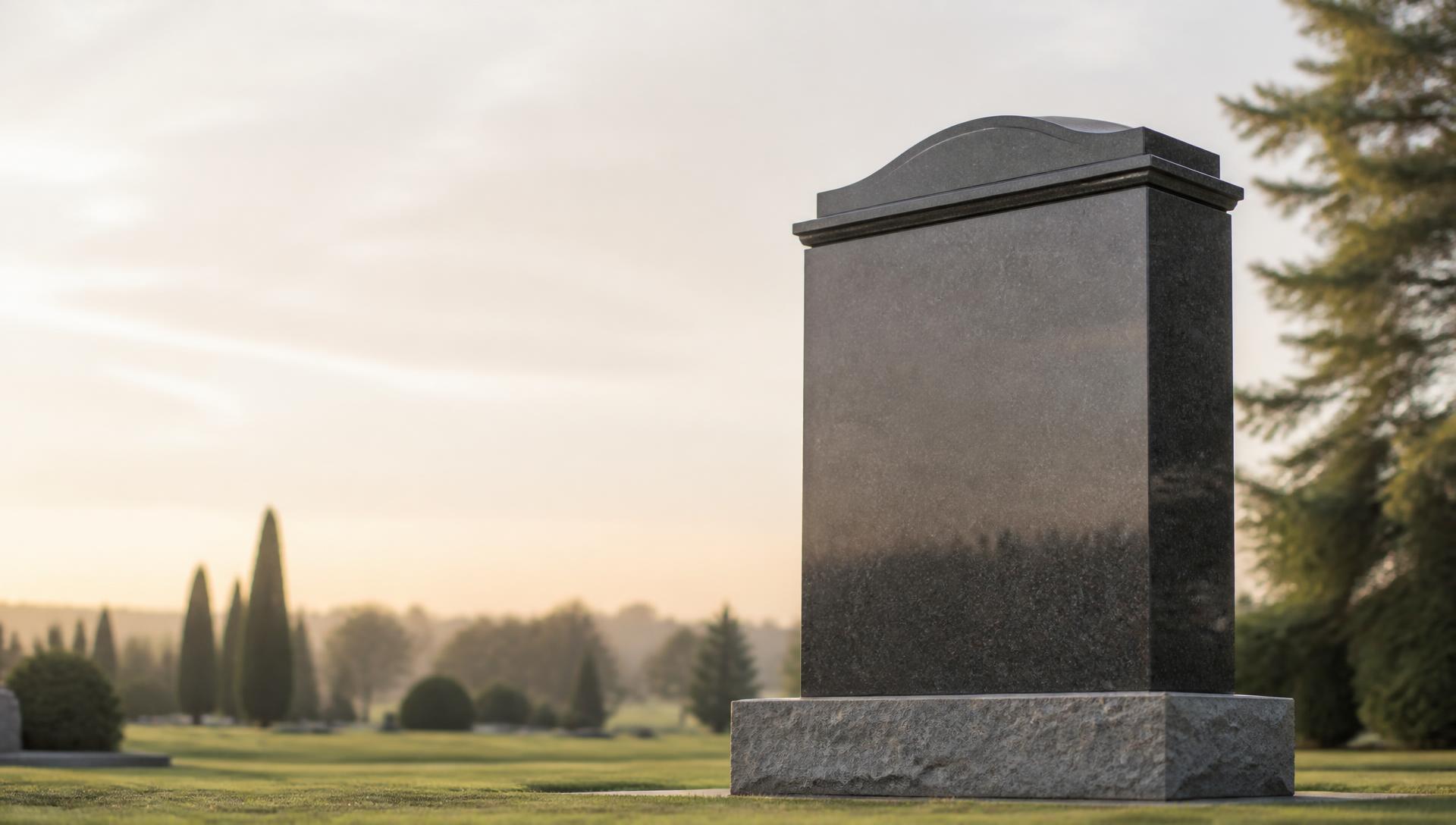
Elberton Craft
Granite craftsmanship from Georgia's historic monument-producing community.
Duluth Service
Approximately 82 miles from the Elberton workshop.
Project Approach
Cemetery requirements → Design → Proof → Production → Inspection → Confirmed delivery or installation
A custom monument should do more than fill a permitted rectangle. It should preserve the names, relationships, dates, and symbols a family wants future generations to understand, while also fitting the exact burial space and the cemetery's current rules.
Clear Stream does not have a verified office or showroom in Duluth. The project workbook places Duluth about 82 miles, or roughly one hour and 46 minutes, from the Elberton workshop. Under the workbook's service model, local installation is available for qualifying projects. Availability still depends on Clear Stream confirming the memorial, foundation scope, cemetery authorization, access, schedule, weather, and site conditions. The mileage and drive time are geographic context only; they are not a promise of production speed, delivery time, an installation date, or same-day service.
This page treats a monument as a long-term information system, not simply a product image. It helps a family decide who the memorial must serve, how the inscription should work now and later, which monument form fits the approved space, and what each party must complete before stone moves. That approach is especially important for companion monuments, family memorials, mausoleums, and cremation structures, where future names, interment rights, multiple components, and site access can affect the design from the beginning.
The Family Record
Start with the story.
Then build the stone.
Before comparing silhouettes, write a short memorial brief. Identify the person or people being honored, the relationship the monument should make visible, the facts that must be preserved, and the emotional tone the family wants the design to carry.
A simple brief keeps the project from becoming a collection of unrelated fonts, images, accessories, and stone shapes. It also gives family members a neutral document to review before permanent decisions are placed into a proof.
Who
Who is being honored?
Name the person or people the memorial must serve, and the relationship the design should make visible.
What
What names, dates, relationships, symbols and images must be preserved?
List every fact that must appear now, verified against reliable source records rather than memory.
Future
What information may need to be added later?
Future dates, spouses, descendants, military or organizational emblems, translated text, and family mottos need intentional space.
An individual monument may need one name, dates, an epitaph, and a focused symbol or portrait. A companion monument must balance two identities while expressing a shared relationship. A central family monument may establish a surname or family history while individual graves carry separate stones. A mausoleum or columbarium can involve several present or future interments, creating a need for durable records of niche, crypt, inscription, and authorization. The number of people served changes the inscription plan, physical scale, future-lettering access, and ownership questions.
List all information that must appear now and all information that may be added later. Future dates, spouses, descendants, military or organizational emblems, translated text, and family mottos need intentional space. Empty space should not be treated as wasted space; in a long-term family composition, it may be a reserved function. Confirm that later inscriptions are allowed and that a qualified craftsperson can safely reach the intended face after installation.
A visitor should be able to find the family name or the person's name first, then dates and relationship, then supporting words and images. That hierarchy can be created with size, placement, contrast, and open space. Decorative borders, columns, vases, portraits, scenes, faith symbols, and sculptural elements should reinforce the record rather than crowd it. For a companion or family monument, establish a consistent grid so present and future inscriptions feel related even when they are added years apart.
If the family is considering text in more than one language, decide whether both versions will appear, whether one is a transliteration, and how line length and character forms affect the layout. Ask the reviewer who knows the language to approve every character, punctuation mark, and line break. Clear Stream's design proof is the place to evaluate the permanent layout, but the family remains responsible for confirming the accuracy of supplied names, dates, and wording.
Cemetery Requirements
The cemetery's approval defines the physical envelope within which the family record can be built.
A Duluth mailing address does not, by itself, identify a cemetery's owner or regulator. The property may be private, church-affiliated, association-run, municipal, veterans, family-owned, or part of a larger memorial park. Ask for the cemetery's legal name, office contact, section, lot, grave-space number, plot owner or interment-right holder, and the name and role of the person who approves monuments. Do not assume that a city office approves a monument simply because the address says Duluth.
The official City of Duluth website links to its municipal Maps and GIS tools and separately to Gwinnett County services. As a planning inference, that division is a reminder to verify boundaries and authority rather than route a cemetery request by city name alone. The official pages reviewed for this draft did not establish one universal citywide monument rule for every Duluth-addressed cemetery. The controlling document must come from the actual cemetery or property authority for the specific space.
Ask the cemetery to state the allowed memorial type and the maximum and minimum tablet height, width, and thickness; base width, depth, and thickness; overall height; finished elevation; setbacks; and foundation dimensions. For a companion or family monument, confirm the number and location of spaces the monument may serve. For a mausoleum, crypt, niche, or cremation memorial, confirm that the family possesses the necessary interment rights and that the proposed structure is permitted in that exact area.
A photograph of a nearby monument can help explain visual preferences, but it is not approval. The neighboring stone may have been installed under an older rule, in another section, or under a family-estate agreement. Send the current written requirements to Clear Stream before accepting final dimensions or a production-ready proof. If the cemetery uses a diagram or specialized terminology, ask its representative to mark how the rule applies to the precise setting point.
Hold Condition
Hold the order while the cemetery authority, plot identification, permitted form, approved dimensions, foundation responsibility, setting party, or receiving plan remains unresolved. These items can change the stone and the price; they are not administrative details to solve after fabrication.
Monument Options
Monuments are the primary focus of this page. The most useful comparison is not simply upright versus flat; it is how much family information the memorial must hold, how the cemetery allows that information to occupy the lot, and how the completed structure can be set and maintained. Begin with the approved envelope, then compare the following forms by visibility, inscription capacity, footprint, foundation, future access, and interment function.
The live Clear Stream memorial gallery provides form references for upright, companion, custom-shaped, and engraved monuments. Catalog images are starting points; the chosen form still requires order-specific dimensions, cemetery approval, a written scope, and a final proof.
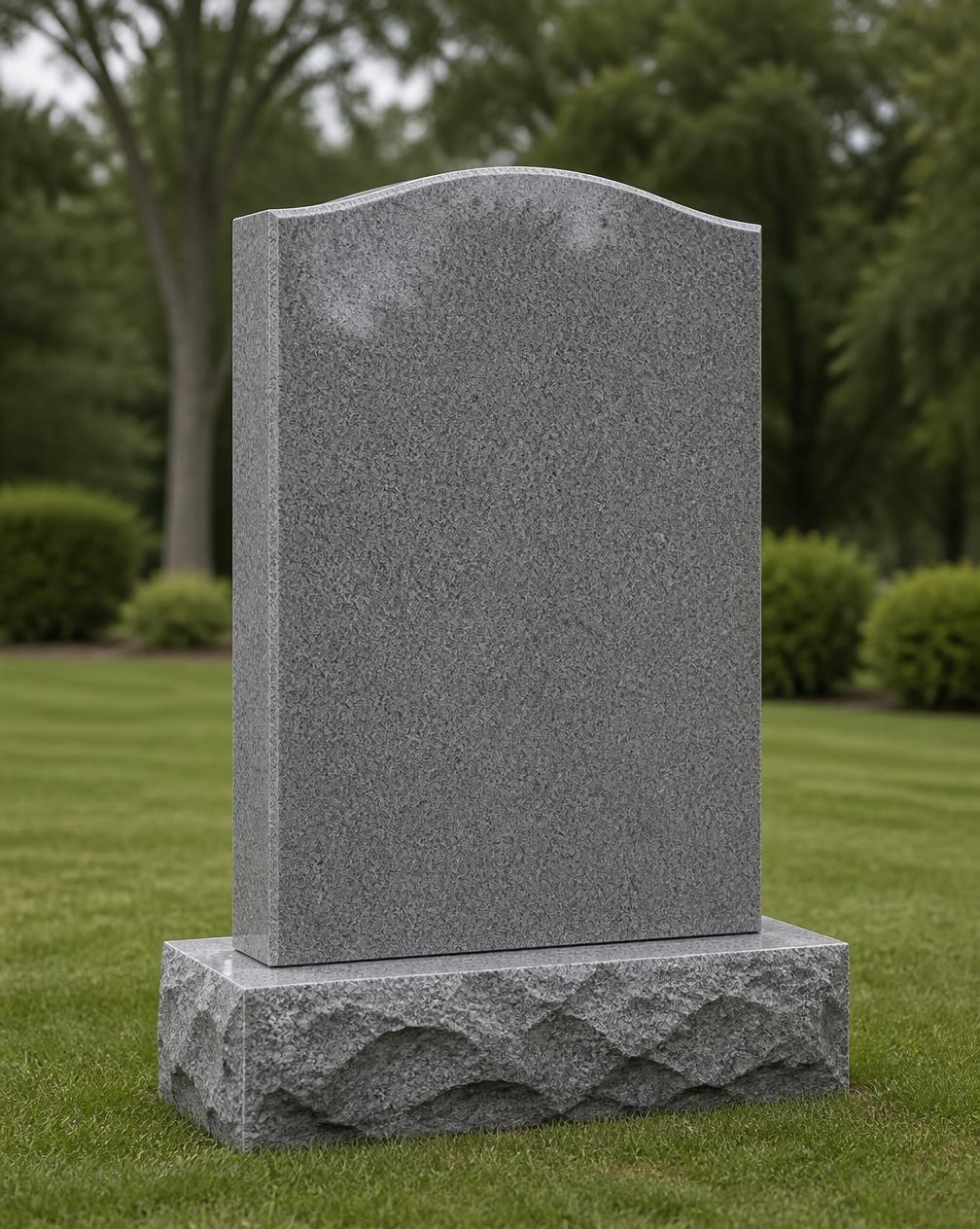
An upright monument commonly uses a vertical granite tablet supported by a visible granite base. Its height makes the name easier to locate across a cemetery, and its face can support a clear hierarchy of names, dates, epitaphs, portraits, symbols, panels, and artwork. The tradeoff is that an upright system needs an approved footprint, a suitable base and below-grade foundation, enough thickness for the intended scale and detailing, and a setting method appropriate to the component weights and site.
For an individual memorial, resist the urge to fill every inch. Choose one dominant name treatment and one or two supporting design ideas. For a custom shape, review the narrowest stone sections, exposed edges, balance, and how rain, mowing, or grounds care will interact with the silhouette. For a portrait or detailed scene, confirm the granite color and finish are suitable for the chosen image method. These craft decisions should be named in the quote and represented in the proof rather than left to a general description such as "custom engraving."
Families can compare upright headstone and monument forms after obtaining the permitted height, width, thickness, base, and foundation specifications for the burial section.
A companion monument usually honors two people in a single coordinated tablet and base. It can use a shared surname or central symbol while preserving separate name, date, portrait, and epitaph areas. A good proof shows how both sides read even if only one death date is known, how reserved space will be handled, and whether future lettering can match the original method, scale, alignment, and contrast.
The cemetery must confirm that the monument may span or serve the intended spaces and that the plot owner authorizes the shared arrangement.
Future work deserves the same attention as the first inscription. Record the granite's commercial name and finish, typeface or letter style, carving or etching method, depth or visual treatment, layout measurements, and the file used for any custom image. Ask who may authorize additions, who can access the stone, and whether on-site work is allowed. A companion design is successful when the completed half and the reserved half feel deliberate rather than unfinished.
Side A
Individual name, dates, portrait, and epitaph area.
Side B
Reserved field matched in method, scale, alignment, and contrast.

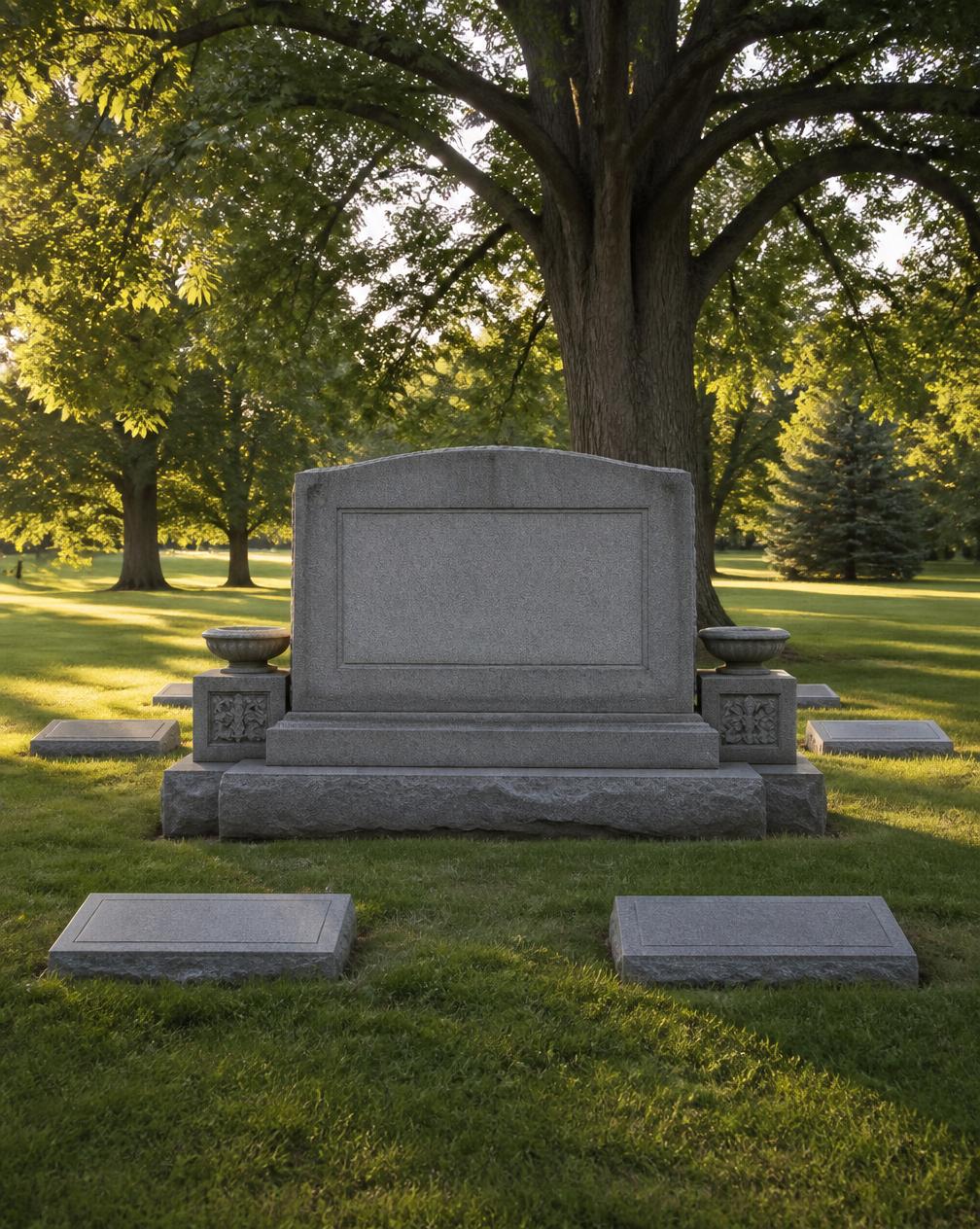
A family monument may act as a central surname or legacy stone for several related graves. Separate individual memorials, footstones, or inscriptions can identify each person, depending on the cemetery's rules. This arrangement can carry family history with more coherence than repeating unrelated designs, but it requires a lot-level plan. The family should map every owned space, grave orientation, the proposed central monument, individual memorial locations, walking clearances, future burials, vases or accessories, maintenance paths, and equipment access.
Ask the cemetery to approve the entire plan, not only the central stone. A monument should not cross an unowned space, obstruct a future interment, reduce required clearance, or force equipment over another grave. Record who controls the family name inscription and later additions. If several branches of a family may use the memorial, agree on an approval method before production so future decisions do not depend on assumptions that were never written down.
Lot plan considerations
Central memorial, individual graves, and a reserved future space, mapped with walking clearances, maintenance paths, and equipment access before approval.
Building-Scale Memorials
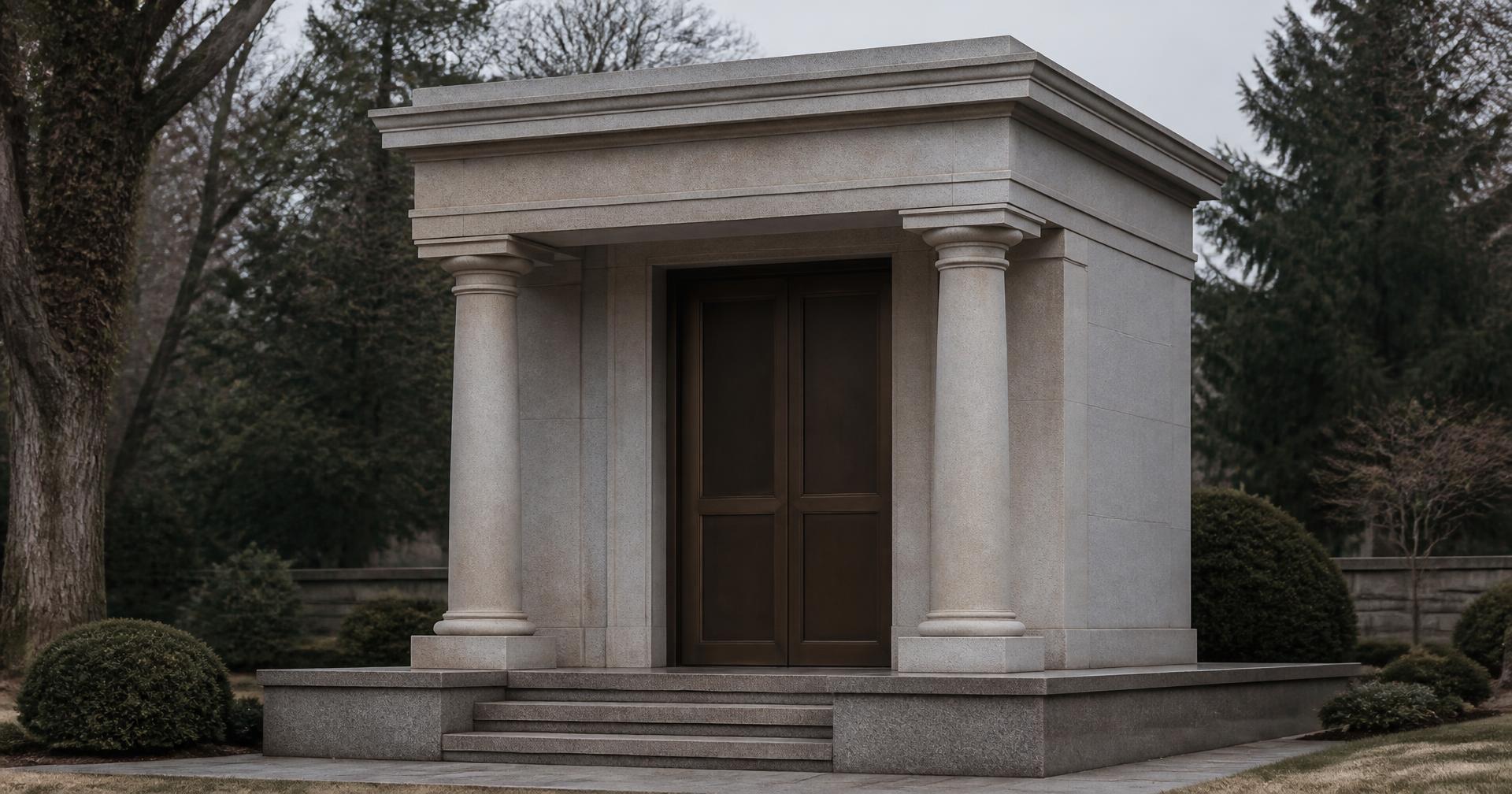
Clear Stream's current mausoleum collection includes one-crypt and two-crypt family forms with flat or roof-style tops and column options. A private mausoleum is not simply a larger upright monument. It combines interment space, architectural granite components, inscriptions, doors or closures, a foundation or structural system, access for placement, and long-term care. It should be considered only when the cemetery permits private mausoleums in the exact location and provides written structural, dimensional, crypt, ventilation or drainage, foundation, installation, and inspection requirements.
Start with rights and capacity, not appearance. Confirm the number and orientation of crypts, who may be entombed, how authorization works, how the cemetery handles opening and closing, and what records will be maintained. Then evaluate the building envelope, setbacks, grade, water movement, approach for lifting equipment, door orientation, visitor access, inscription faces, future lettering, and maintenance responsibility. The quote must distinguish the manufactured granite structure from excavation, concrete, site preparation, crypt equipment, permits, cemetery charges, setting, sealing, and other work that may be supplied by different parties.
Review the verified Clear Stream mausoleum collection only after the cemetery confirms that a private mausoleum is an eligible use of the family’s space. Product availability and project scope must be confirmed in writing.
Cremation Memorials
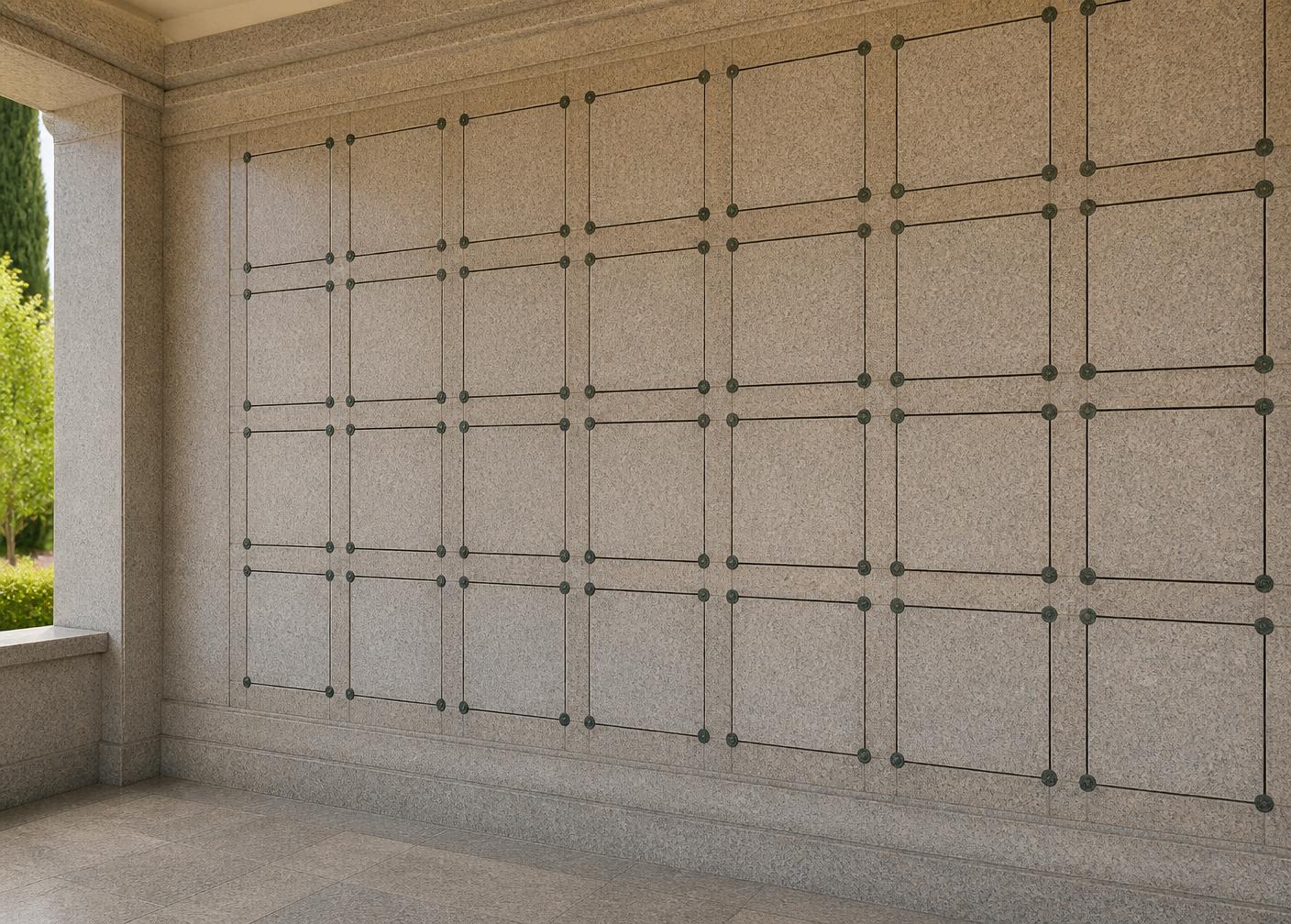
Clear Stream's current cremation collection includes two-niche memorials, columbaria, cremation headstones, benches, urns, and dedicated structures; the live catalog also displays a twelve-niche single-sided columbarium. For this Duluth page, columbaria and upright cremation structures are the featured cremation comparison. They can preserve several names in a compact family record, but a niche product does not itself grant the right to place remains on a cemetery lot. The cemetery must authorize the interment use, location, capacity, access, and closure system.
Before selecting a niche count, identify the intended urn dimensions, number of inurnments per niche, interior clearances, door material and fastening method, inscription area, name sequence, future access, who may open and close a niche, and what documentation the cemetery requires. Confirm whether the unit serves one family or a larger organization and who will maintain the placement record. For a family columbarium, plan a naming system that remains readable as later niches are used rather than adding inscriptions wherever space happens to remain.
Foundation, drainage, orientation, pedestrian access, lifting clearance, and service access matter. Water should not be directed toward openings or create an unsafe visitor approach. The responsible site and installation professionals should evaluate grade and foundation conditions under the cemetery's rules. If freight is part of the plan, the receiver needs suitable unloading capability and a secure location; a finished columbarium should not be delivered as an unattended residential parcel.
Use the live cremation memorial collection to compare verified product categories, then obtain explicit cemetery approval for the selected niche, columbarium, or cremation-monument configuration.
A slant monument presents a pronounced sloped face and may be set on a separate base; a bevel rises more modestly above grade with a gently angled inscription surface. Either can offer better visibility than a flush marker while remaining below a full upright monument. The category name does not define a universal dimension. Confirm overall height, face angle, base, foundation, finished elevation, mowing clearance, orientation, and whether the approved section treats the form as a monument or marker.
Some burial sections require a lawn-level granite marker or a flat plaque mounted on an approved base. Their lower profile supports an open lawn appearance, but the smaller visible field can limit hierarchy, portrait scale, and future additions. Flat and granite differ in manufacture, attachment, finish, weathering, and care. A cemetery may prescribe one material, border, vase system, or base configuration. Approval for a granite marker does not automatically authorize flat, and approval for a marker does not authorize an upright monument.
Grave markers remain secondary on this monument-focused page. They are useful when the cemetery requires a low profile or the family deliberately prefers one, but they should not displace companion, family, mausoleum, or cremation-monument planning. The correct form is the one that fits the approved space and preserves the intended record with enough durable, readable area.
| Form | Profile | Typical Planning Considerations |
|---|---|---|
| Upright | Vertical | Height, base, foundation, access |
| Companion | Shared | Multiple names, future lettering, lot coverage |
| Family | Central / family | Lot plan, future burials, access |
| Slant | Angled | Face angle, base, elevation |
| Bevel | Low angled | Height, base, mowing clearance |
| Flat Granite | Lawn-level | Dimensions, setting, mowing |
| Flat | Low profile | Material, base, attachment, cemetery rules |
Inscription
A permanent inscription is both a design and a record. It should remain understandable when family members who approved it are no longer available to explain the choices. For a multi-person monument, define the naming pattern, date format, relationship labels, symbols, and future-lettering fields before the first proof. Keep a final approved copy of the text and artwork with the cemetery approval, quote, proof, granite identification, and installation record.

Prepare names from birth, marriage, military, religious, or other reliable family records rather than copying a social-media profile or relying on memory alone. Decide how maiden names, suffixes, nicknames, ranks, titles, and date formats should appear. Verify quotations against the authorized source and check whether the family has permission to reproduce copyrighted writing, artwork, logos, badges, or organizational marks. A familiar emblem can still have usage rules.
Create one clean inscription worksheet and assign a primary family approver. If several relatives submit competing documents, the design team may not know which version controls. The worksheet should list exact capitalization, punctuation, line breaks, dates, symbols, portrait filename, and any text intentionally omitted. Each revision should carry a date or version number so the final approval can be traced to the final proof.
Material
Granite is widely used for cemetery monuments because it combines structural strength, outdoor durability, and surfaces suitable for lettering, carving, polishing, and imagery. Record the commercial stone name, available color range, grain, known source, finish, and suitability for the intended process. Elberton's granite-industry heritage does not mean every color offered by every memorial company is quarried in Elberton. Ask for origin information when it matters to the family and avoid treating a trade name as a geological guarantee.
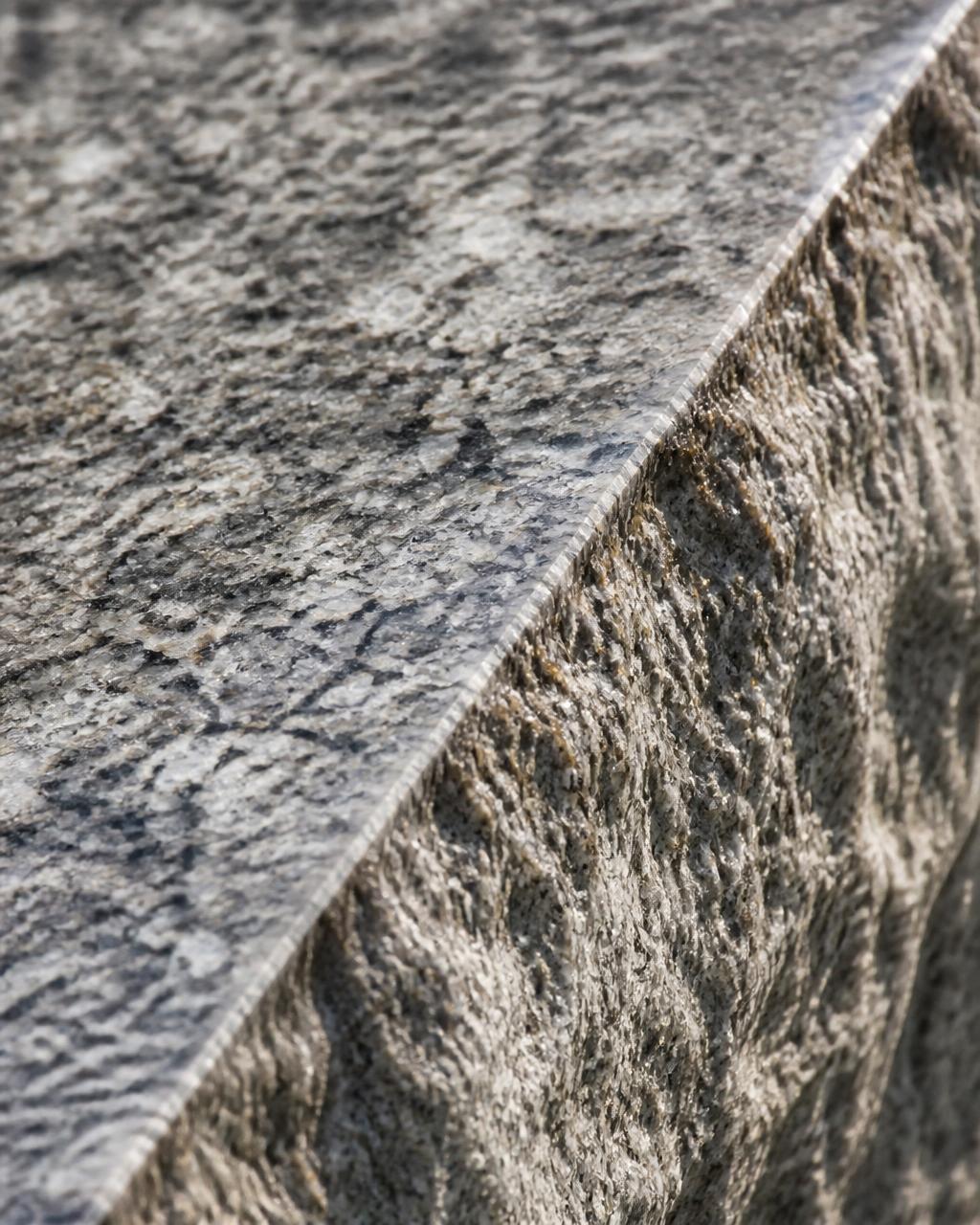
Polished and non-polished surfaces reflect light differently. A polished dark face can support strong contrast and detailed imagery, while textured or rock-pitched areas can create depth and architectural character. Fine lettering needs enough size and contrast for the selected stone and exposure. The proof should distinguish polished faces, unpolished panels, textured edges, recessed carving, and any paint or applied element so the family understands what is permanent stonework and what may have different care requirements.
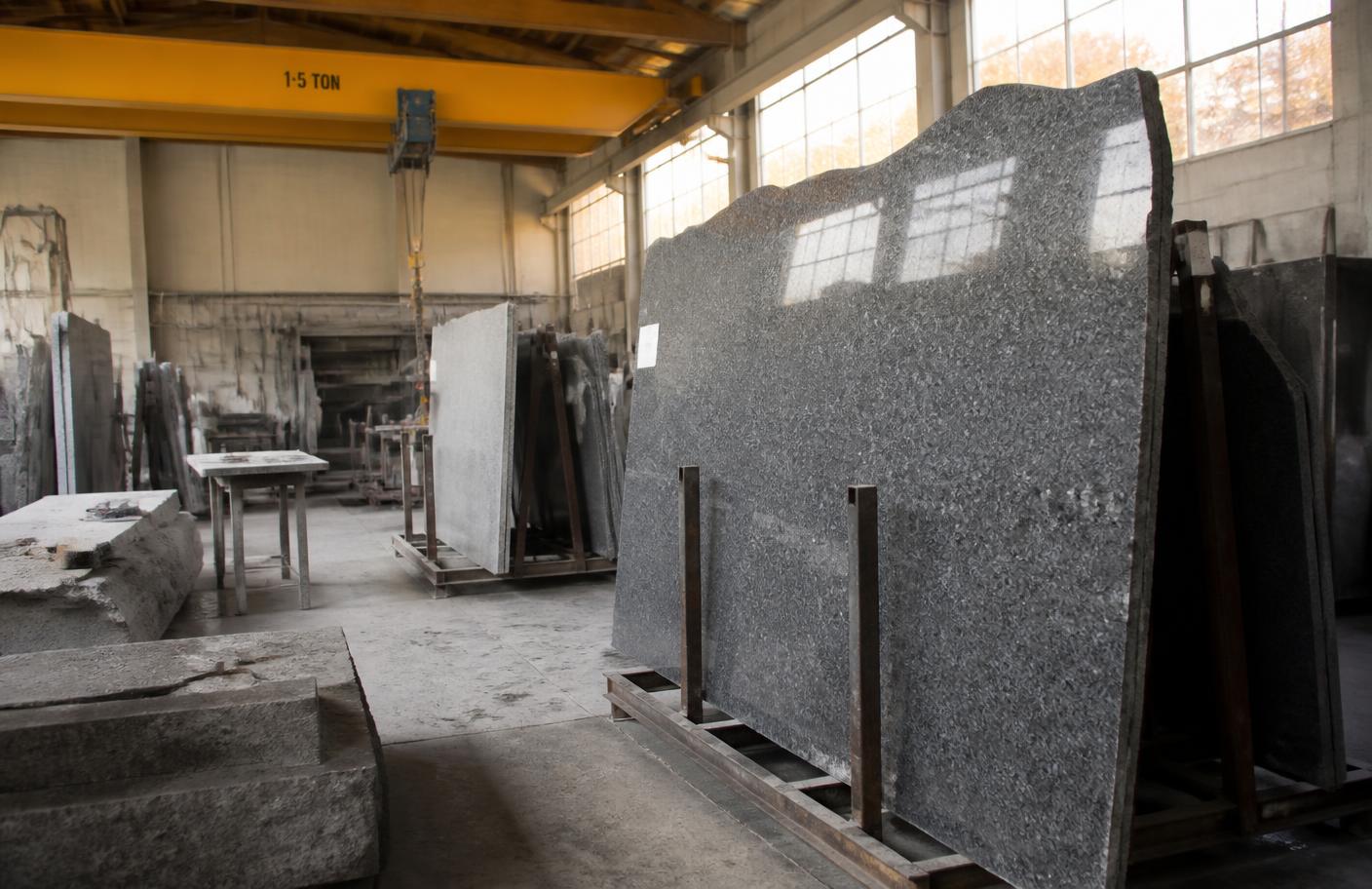
Granite selection is recorded by commercial name, color range, grain, known source, and finish. Elberton's industry heritage is context, not a quarry guarantee for every color.
Sandblasted lettering or carving removes material to form recessed names, panels, and decorative elements. Laser etching can create fine imagery on suitable dark polished granite. A porcelain photograph is a separate applied component. These methods are not interchangeable, and not every source image, stone color, finish, cemetery, or budget supports every method. Ask the written scope to identify the actual technique, source image, intended contrast, size, placement, and any separate component or attachment.
Method
Material is removed to form recessed names, panels, and decorative elements in the stone itself.
Method
Fine imagery created on suitable dark polished granite, dependent on stone color and finish.
Method
A separate applied component with its own attachment, care, and cemetery considerations.
Future Planning
Why Clear Stream
01
The City of Elberton identifies the community as the Granite Capital of the World and describes it as a major center of granite-monument production. Clear Stream's Elberton base places the company in a community organized around quarrying, cutting, shaping, finishing, lettering, carving, inspecting, crating, and moving heavy memorial stone. That background is useful when it produces an accurate order and a carefully finished memorial; it should not be used to imply that every granite color is locally quarried or that location alone proves quality.
02
Clear Stream's current published process includes consultation, selection of style and personalization, a digital proof, production after approval, inspection, and delivery coordination. For a family, the proof creates a deliberate checkpoint between conversation and permanent stone. It should be compared with the inscription worksheet, cemetery approval, dimensioned quote, and component list. Names, dates, punctuation, layout, artwork, granite, finish, overall dimensions, base, niches or crypts, accessories, and reserved future fields all need review at the appropriate level of detail.
03
Clear Stream currently publishes upright and companion memorials, custom monuments, mausoleums, cremation structures and columbaria, markers, benches, statues, vases, and custom work. On this page, that range is organized by function rather than presented as an undifferentiated catalog. A family can compare inscription capacity, number of people served, interment function, footprint, foundation, access, maintenance, and future work, then remove every option the cemetery will not approve.
04
At the workbook's approximate 82-mile distance, Duluth falls within the local-installation category. This does not mean every product or property automatically qualifies. Clear Stream must confirm the exact memorial, site, cemetery authorization, foundation responsibility, component weights, lifting and access requirements, schedule, weather, and installer permissions. A private mausoleum or large multi-piece family structure can require a different team and scope than an upright tablet. The written quote should say precisely what installation work is and is not included.
05
Clear Stream's live pages state that completed memorials receive a quality inspection before shipping and that freight pieces are secured in a wood crate on a pallet. The current guidance also requires an attended receiver who can inspect the shipment. These controls matter even when Duluth is geographically close to Elberton. A heavy monument should move under a named handoff: component list, condition check, unloading or lifting responsibility, safe storage if needed, and authorization for the next movement to the setting point.
Regional Service
The workbook's required local fact places Duluth about 82 miles, or roughly one hour and 46 minutes, from Clear Stream's Elberton granite workshop. That supports the local-installation service category for qualifying Georgia projects. It does not measure freight transit, production, crew availability, foundation cure time, cemetery approval, or time inside a cemetery gate. The actual cemetery address and setting point—not the center of Duluth—must be used for route, access, and schedule planning.
Origin
Elberton, GA
Service Area
Duluth, GA
Duluth's official municipal site provides City Maps and GIS tools and separately points residents to Gwinnett County services. Use those resources only when a boundary or government responsibility is relevant. A cemetery may be within the City, in unincorporated Gwinnett County, or privately governed regardless of its postal city. The memorial application should go to the entity that owns or operates the cemetery and controls the specific burial section. Do not infer that the City of Duluth sets monument policy for every address using "Duluth, GA."
Ask the cemetery or its authorized representative to provide the street address, approved entrance, work-hour restrictions, internal route, section and lot, and the person who will identify the setting point. Add photographs of the gate, lanes, grade, nearby monuments, trees, overhead lines, drainage paths, and the grave area. Record gate width, turning space, soft ground, slope, curb or step changes, turf-protection rules, and whether cemetery staff must be present.
For a companion or family monument, map the relationship between the base and each grave. For a mausoleum or columbarium, include a dimensioned site plan, foundation or structural drawings required by the cemetery, visitor approach, door orientation, service access, and component-handling plan. If the site cannot safely accept the required equipment, the design or scope may need revision before production. Local availability should never be used to bypass a cemetery's approved setter or site rules.
Service Model
The Duluth distance supports an installation option, not a guarantee. Do not schedule cemetery work, foundation completion, family travel, unveiling, or an event until Clear Stream and the cemetery have confirmed the order-specific scope and date in writing.
Two Service Paths
If Clear Stream confirms local installation in the written scope, identify who secures the cemetery permit, pours or approves the foundation, transports each component, sets and aligns the memorial, seals or joins components if applicable, protects the grounds, cleans the site, photographs completion, and obtains any cemetery sign-off. If Clear Stream does not confirm installation for that order, the company can coordinate its published free insured shipping to an approved attended receiver, while the family or cemetery arranges an authorized local setter. These are different service paths and should not be blended in the copy or quote.
Process
A custom-monument project can involve the family, cemetery, Clear Stream, a foundation contractor, a carrier, and an installation team. Instead of relying on a long email thread, keep seven current records. Each record answers a different question and gives the next party the information it needs. Clear Stream's verified consultation, proof, production, inspection, and delivery process fits within this record-based framework.
01
Record who will be honored, the relationships to show, the names and dates known now, future fields, desired tone, essential symbols or images, interment type, budget considerations, and the primary family approver. Include reliable source documents for spelling and dates. This brief guides the design without pretending the cemetery has approved a particular form.
02
Collect the legal cemetery name, operator contact, plot owner or interment-right holder, section, lot, grave or niche identifiers, current rule sheet, monument application, dimensioned envelope, permit and setting fees, foundation requirements, authorized installer rules, and written approval. For a family structure, include a lot map. For a mausoleum or columbarium, include the rights, capacity, structural, access, and inspection requirements specific to that use.
03
The quote should identify product type, granite, color and finish, tablet or structure dimensions, base, panels, doors or niche components, lettering and artwork methods, portraits, accessories, quantity, component weights when needed for handling, included proof work, price, payment terms, production assumptions, shipping or installation scope, exclusions, and change procedures. Cemetery, foundation, permit, receiving, and setting charges should be assigned rather than left ambiguous.
04
Review every visible and functional element against the family brief, source records, written quote, and cemetery approval. Check all names, dates, punctuation, typography, line breaks, portrait identity, artwork, emblems, granite description, finish zones, dimensions, base, reserved fields, panel or niche assignments, and orientation. If a revision changes a priced or approved feature, obtain a revised quote or cemetery response before approving production.
05
The release should point to the final proof version and confirm that the family approval, cemetery approval, payment condition, material availability, and scope remain aligned. Record the current planning range and the events that can change it. Production should not begin from an obsolete proof, a verbal dimension, or a design that the cemetery approved before later changes.
06
List every component and its destination, condition-review point, packaging or transport method, receiver, unloading or lifting equipment, delivery appointment, inspection-before-signing responsibility, temporary storage if required, and damage-report procedure. If Clear Stream is transporting and installing directly, replace freight-only steps with the confirmed crew, cemetery access, foundation readiness, setting sequence, and site-protection plan.
07
After setting, record the date, exact location, installer, final photographs, cemetery acceptance if used, warranty or care documents, granite and finish identification, proof and artwork files, and future-lettering specifications. For mausoleums and columbaria, maintain a separate interment and panel or niche record under the cemetery's procedures. Give the family a copy that can be found years later.
Checklist
Use this list as a conversation guide, not as a substitute for the property's documents.
Rules can vary by cemetery and sometimes by section, lot type, burial method, or date of purchase. Obtain written answers for the exact space and send them to Clear Stream before production.
Milestone 1 — cemetery and rights confirmation. The family first confirms the exact plot or interment rights, governing rules, permitted form, dimensions, foundation, installer, fees, and delivery process. Mausoleums and columbaria may require additional drawings, capacity records, structural review, or cemetery approvals. A project waiting on these items is not ready for a reliable production or installation date.
Milestone 2 — specification, quote, and proof approval. Granite availability, custom shape, number of components, carving or image complexity, niche or crypt configuration, design revisions, and family response time can affect this stage. The schedule should identify which proof version is final and what change would require repricing or renewed cemetery approval. A verbal “looks good” should not replace a recorded final approval.
Milestone 3 — production and quality inspection. Cutting, shaping, finishing, lettering, carving, etching, assembly preparation, and quality review vary by monument. A stock form with standard lettering is not equivalent to a custom family structure. Inspection should compare finished components with the approved scope and identify any issue before the movement plan begins. The date a stone leaves production is not the same as a cemetery installation date.
Milestone 4 — foundation and site readiness. The responsible party must complete excavation, foundation work, cure time, grade preparation, access clearance, and any cemetery inspection under the approved plan. Weather and ground conditions can delay this milestone even when the stone is complete. For multi-piece structures, the crew should verify dimensions, elevation, component handling, and setting sequence before transport is released.
Milestone 5 — transport, receiving, and installation. For confirmed direct installation, coordinate the cemetery’s work window, crew, equipment, route, foundation readiness, and setting point. For freight, Clear Stream’s published guidance says the memorial is crated and palletized, an attended receiver must inspect it, and shipping is insured. Confirm appointment, unloading capability, storage, and the authorized local setter. Driving distance is not freight transit time, and freight delivery is not cemetery installation.
Clear Stream's published guidance says freight memorials are secured in a wood crate on a pallet with insured shipping, and that an attended receiver must be able to unload and inspect the shipment before signing. Confirm the appointment, unloading capability, secure storage, and the authorized setter who will transfer the memorial to the grave.
Before a freight handoff, review the current return, warranty, and shipping-damage policy. The order documents and the current policy should control. Photograph packaging and visible damage, make notation with the carrier, retain records, and contact Clear Stream promptly.
Questions
More answers are available in Clear Stream's frequently asked questions.
Company Information
Current warranty, return, and shipping-damage terms are stated on the return, warranty, and shipping-damage policy. Additional service areas are listed on the verified service-area hub, and bespoke projects are described under custom memorial work.