How Long Do Granite Headstones Last
August 3, 2026 • Clear Stream Monuments • 16 min read
Key Takeaways
Granite is among the most durable materials used for memorials, but its appearance and stability still depend on stone quality, installation, weather, and care.
- A well-made granite headstone can remain in place for many generations, often for centuries.
- Weathering usually changes the surface gradually rather than causing sudden failure.
- Drainage, foundation work, thickness, and cemetery exposure affect long-term performance.
- Gentle cleaning and regular inspections can help prevent small problems from becoming serious damage.
- A qualified monument provider can help match the design, stone, and installation to the cemetery and family’s needs.
Typical lifespan of a granite headstone
When families ask how long do headstones last, granite is often considered because it combines strength with a dignified, versatile appearance. A properly selected and installed granite memorial may last for centuries in an outdoor cemetery setting. That does not mean it will look exactly the same forever, though. Polished surfaces, inscriptions, and edges can change gradually as the stone meets rain, sun, freezing temperatures, and biological growth.
Why granite can last for centuries
Granite is a dense natural stone made from interlocking mineral crystals. That structure gives it substantial resistance to ordinary abrasion, moisture, and seasonal temperature changes. It is not impervious to damage, but its slow rate of weathering allows a sound memorial to remain recognizable and stable for generations.
The stone’s durability is only part of the story. Cutting, polishing, engraving, transport, and installation all influence how well the finished memorial performs. A strong material cannot fully compensate for a weak foundation or careless handling.
What “lasting” means for a memorial
Longevity can describe several different things. A headstone may remain physically upright while its polish softens, its lettering becomes less distinct, or stains develop around the base. Families may value the stone’s structural stability, the readability of its inscription, and its ability to continue serving as a respectful place of remembrance.
Those changes should be viewed in context. A lasting memorial is more than an unchanged surface; it is a marker that remains safe, legible, meaningful, and connected to the person it honors. Some cosmetic wear can be addressed without replacing the entire stone.
How granite compares with marble, slate, and bronze
Different memorial materials age in different ways. Granite is generally chosen for its combination of hardness, outdoor durability, and broad range of colors. Marble can offer a softer, luminous appearance, while slate has a distinctive texture but may be more vulnerable to splitting or flaking depending on its condition. Bronze develops a patina and may require attention to its metal surface and mounting. For a closer look at how bronze compares to granite and what that patina means for upkeep, see Bronze Grave Markers: Styles, Cost Factors, and How They Compare to Granite.
A material comparison can help narrow the choice, but local conditions matter just as much. A useful overview of headstone materials and durability can provide additional context before a family compares samples and cemetery requirements.
| Material | Typical aging pattern | Common consideration |
|---|---|---|
| Granite | Gradual surface weathering | Strong choice for long-term outdoor use |
| Marble | Softening, staining, or loss of detail | Elegant appearance may require more care |
| Slate | Layering, flaking, or splitting | Condition and quality vary by stone |
| Bronze | Patina and surface discoloration | Mounting and metal care matter |
The table is a starting point rather than a guarantee. The quality of the individual piece, its placement, and the workmanship behind the memorial can change the practical result.
Signs that an older granite headstone is still structurally sound
An older granite headstone may still be in good condition when it stands securely, has no widening cracks, and shows no major movement at its foundation. Minor discoloration, softened polish, or shallow surface marks do not automatically mean the stone is failing. A careful inspection should distinguish appearance from safety.
Look at the stone from several angles and avoid pushing or climbing on it. If it leans, rocks, has a separated base, or shows a crack running through a major section, keep people away and contact a qualified cemetery or monument professional.
What affects how long granite headstones last
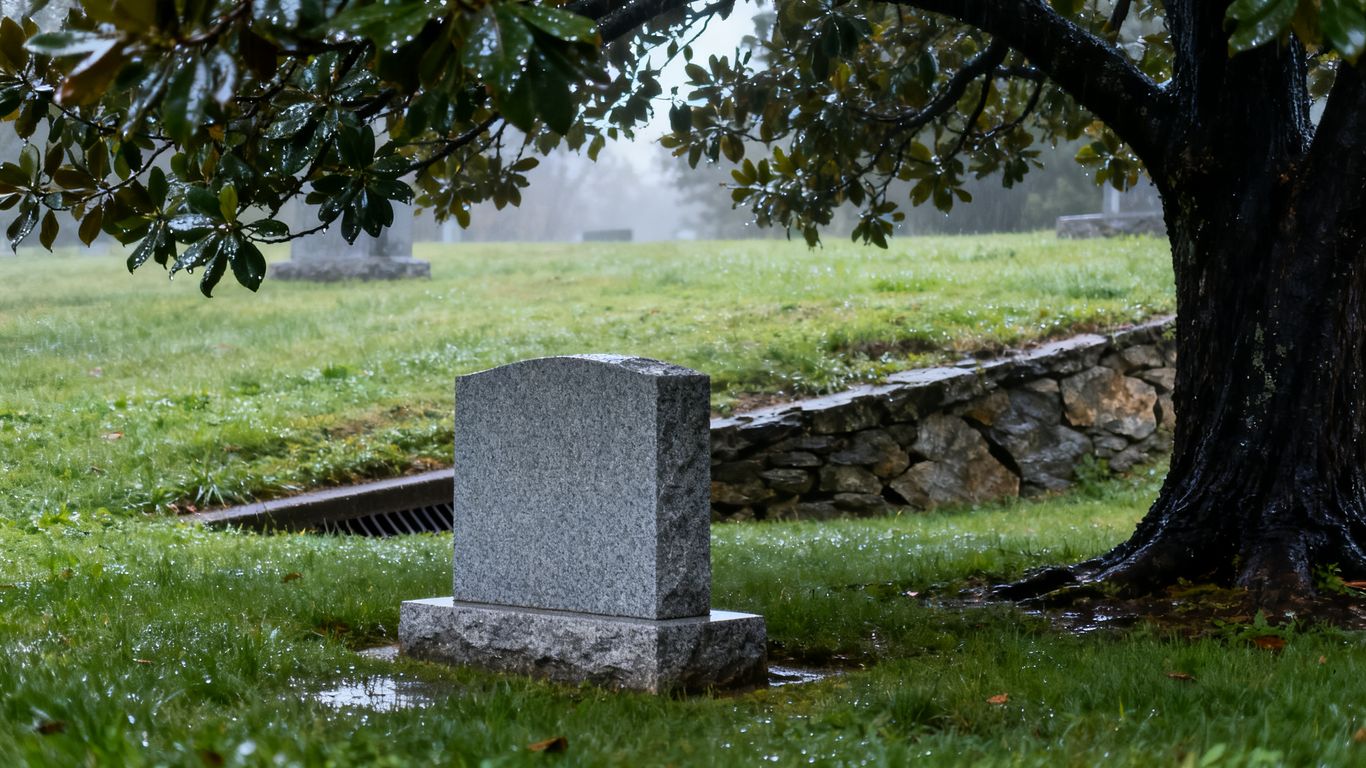
Granite does not age at one universal rate. Two memorials made from stone that looks similar may experience very different conditions because of their mineral makeup, orientation, foundation, and surrounding landscape. The most useful answer to how long do headstones last is therefore a range shaped by several practical variables.
Granite quality, density, and mineral composition
Granite is a natural material, so color, grain, mineral composition, and internal structure vary. A reputable monument company should be able to explain the available stone and show a physical sample when possible. Dense, sound material with careful finishing is better positioned for long-term outdoor exposure than a piece with significant flaws or poorly finished surfaces.
Color alone does not determine durability. The stone should be evaluated as a whole, including its intended finish, thickness, engraving method, and the quality controls used during fabrication.
Local weather and climate conditions
Sunlight, rainfall, humidity, snow, ice, wind, and freeze-thaw cycles all affect a memorial’s surface. In colder areas, water entering a small defect and freezing repeatedly can enlarge it. In warm, humid areas, staining and biological growth may be more noticeable. Coastal air and de-icing salts can also add stress to exposed materials and nearby metal components.
Weathering is usually slow, but repeated exposure adds up. Choosing a finish and design suited to local conditions helps a family plan for ordinary care rather than reacting only after damage appears.
Cemetery location, drainage, and exposure
A headstone placed where water collects may age differently from one on a well-drained, gently sloping area. Sprinklers, runoff, tree shade, falling branches, lawn equipment, and nearby vegetation can all affect the stone. Persistent moisture around the base can encourage staining and biological growth, while poor drainage may contribute to settling.
Before ordering, it is sensible to walk the cemetery plot after rain if possible. Notice where water travels, how much sun the area receives, and whether roots or maintenance equipment could create future problems.
Headstone thickness, design, and installation
Thickness and shape affect both strength and handling. Tall, narrow, or highly detailed monuments may need especially careful engineering and foundation work. The base must be level and stable, and the installation should follow cemetery rules as well as sound monument practice.
Families should also allow time for approvals and scheduling. A guide to headstone delivery timelines explains how material availability, custom work, cemetery approval, and weather can affect the process. Planning early leaves more room to resolve installation questions calmly.
How granite weathers over time
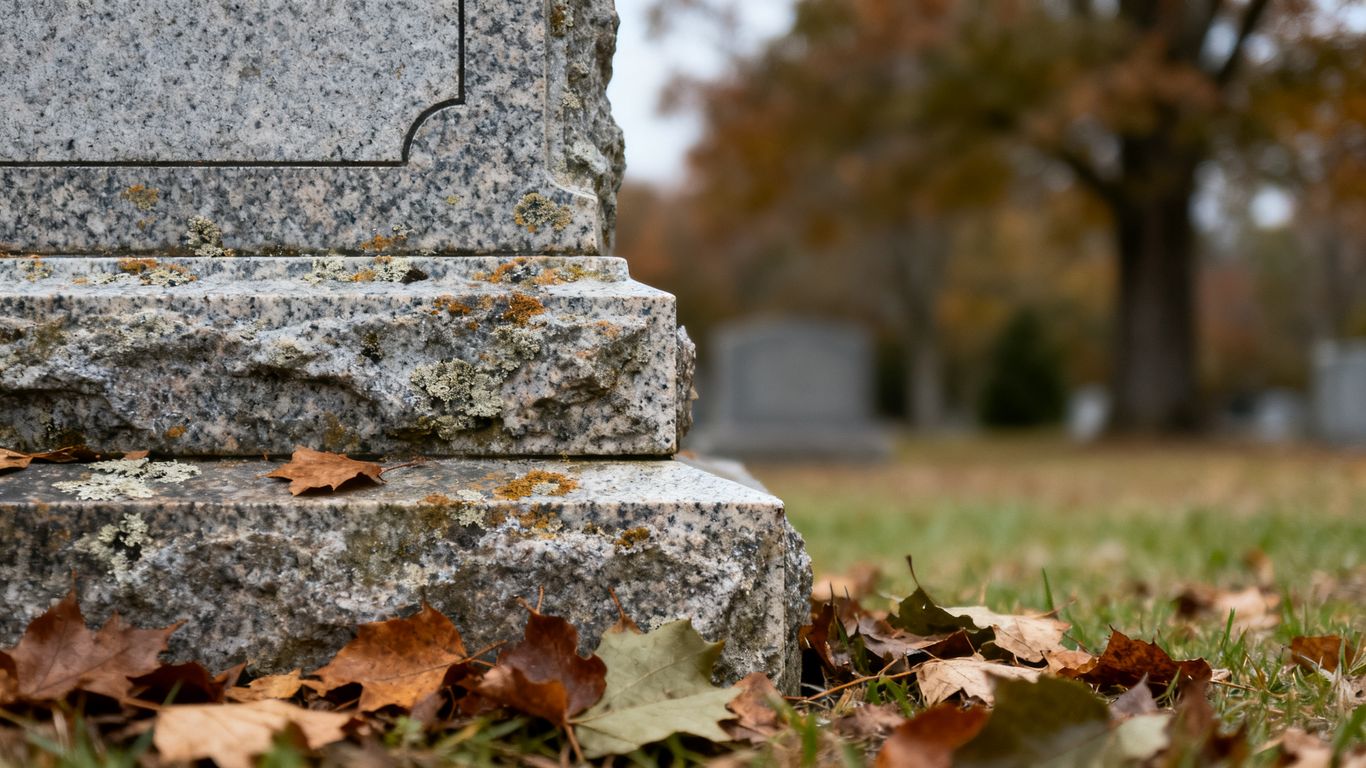
Granite weathering is often gradual enough that families notice it only when comparing an older photograph with the stone as it appears today. Changes may affect color, polish, lettering, edges, or the area around the foundation. Many surface changes are cosmetic, but some are warnings that deserve professional attention.
Fading, staining, and surface discoloration
Natural light can make a polished surface appear less vivid over many years, while water, soil, rust, hard-water deposits, and lawn treatments may leave stains. Dark granite can show mineral deposits and fingerprints clearly; lighter granite may show biological growth or runoff more readily. Staining does not necessarily mean the stone itself has weakened.
Cleaning should be approached conservatively because aggressive methods can create a larger visual problem than the original stain. Test any approved method on a small, inconspicuous area first, and stop if the finish changes.
Cracks, chips, and damaged edges
Small chips can result from weather, accidental impact, mowing equipment, or transportation. A crack near a corner may remain limited, but a crack crossing a broad section or continuing through an attachment point needs evaluation. Do not fill or glue a damaged memorial without understanding how the repair material will interact with the stone.
A professional can determine whether the issue is superficial, repairable, or related to movement in the base. Prompt attention is especially useful before water and freezing temperatures enlarge an existing defect.
Lettering wear and loss of inscriptions
Engraved lettering may remain readable for a very long time, but its appearance can change as the surrounding finish weathers. Paint or gilding used to add contrast may fade sooner than the granite. Surface-mounted lettering and decorative elements can also loosen if their attachment points deteriorate.
Photograph the inscription when it is clear and keep a written record of names, dates, and wording. That documentation can help guide restoration if a portion later becomes difficult to read.
Lichen, moss, and biological growth
Moss, lichen, algae, and other growths favor shaded, damp conditions. They may cling to textured carving, collect around edges, or make the stone appear darker. Removing growth too forcefully can scratch the surface or break fragile details, especially on an older memorial.
The surrounding environment matters as much as the cleaning itself. Trimming plants, improving airflow where allowed, and addressing persistent runoff can reduce the conditions that encourage regrowth.
Choosing granite for a long-lasting memorial
Selecting a memorial involves both practical decisions and deeply personal ones. Granite offers many combinations of color, shape, finish, lettering, and symbolism, so families can create a tribute that feels connected to the person remembered. Durability is important, but it should sit alongside cemetery rules, budget, maintenance expectations, and the design’s emotional meaning.
Common granite colors and their durability
Granite is available in shades such as gray, black, red, brown, and patterned blends. The visual effect of a color depends on its grain, polish, carving, and the light at the cemetery. Dark polished stones can create strong contrast for lettering, while lighter stones may offer a softer appearance.
There is no simple rule that one color will always outlast another. Ask about the specific stone, its intended finish, and how inscriptions or decorative details will appear after years outdoors. The guide to Georgia granite memorials offers a useful example of how regional stone, color variety, and craftsmanship can shape a selection.
Selecting a reputable monument company
A trustworthy provider should explain the stone, design, proofing, installation, cemetery coordination, and care process in clear language. Families should feel able to ask questions and take time with decisions rather than being rushed through a difficult purchase.
Review the proposed inscription carefully and ask how the finished piece will be protected during delivery and placement. For a simple, low-profile option, the Granite Traditional Cemetery Marker illustrates how clean lines and a smooth engraving surface can support a restrained memorial design.
Matching the design to local cemetery requirements
Cemeteries may regulate dimensions, thickness, color, foundations, vases, symbols, and the types of memorials permitted in particular sections. Approval requirements can also affect the schedule. Confirm these details before finalizing a design so the finished stone can be installed without avoidable changes.
A provider can help interpret the cemetery’s written rules, but the family should request the rules directly when possible. This is especially important for tall monuments, companion markers, and designs with attached or integrated features.
Balancing durability, appearance, and budget
A larger or more intricate memorial may provide more room for inscriptions and artwork, but it can also increase material, fabrication, foundation, and installation costs. A smaller design can still be deeply personal when the lettering, shape, and symbols are chosen thoughtfully. Families should compare complete estimates rather than focusing on stone price alone. Our guide to affordable headstone options covers budget-friendly choices that don’t compromise on quality.
For two people sharing a plot, the Granite Hickey Cemetery Marker shows how a companion design can provide balanced space for two inscriptions while keeping a classic appearance. The right choice is the one that meets the cemetery’s requirements and feels financially and emotionally appropriate.
How to maintain a granite headstone
Granite generally needs modest care, but modest does not mean careless. Cleaning too often or using harsh products can wear finishes and obscure details. A gentle routine, combined with periodic observation, is usually more helpful than trying to make an older memorial look newly installed.
Safe cleaning methods for granite
Begin by checking cemetery guidance and the stone’s condition. Use clean water, a soft natural- or nylon-bristle brush, and a mild, pH-neutral cleaning approach approved for natural stone. Work from the top downward, rinse thoroughly, and allow the surface to dry so you can see whether any residue remains.
Avoid cleaning a fragile, cracked, flaking, or unstable stone yourself. A professional assessment is safer when the surface includes delicate carving or when the memorial has not been maintained for many years.
Products and techniques to avoid
Household bleach, acidic cleaners, abrasive powders, wire brushes, pressure washers, and scraping tools can damage polished or weathered granite. Repeatedly applying sealers without professional advice may also trap moisture or leave an unwanted film. Never use a method simply because it worked on a countertop or paving stone.
A cautious maintenance plan generally excludes:
- Acidic or strongly alkaline household cleaners
- Wire brushes, metal scrapers, and abrasive pads
- High-pressure spraying close to lettering or joints
- Bleach mixtures and unapproved stain removers
These precautions protect both the stone and the inscription. If a stain does not lift with gentle care, stopping early is usually wiser than escalating to a harsher treatment.
When professional cleaning or restoration is needed
Professional help is appropriate when growth is extensive, staining is embedded, lettering is difficult to read, or the stone shows cracks, flaking, or movement. A specialist can identify the material and finish before choosing a treatment. Restoration may involve cleaning, repairing, repainting lettering, resetting components, or stabilizing the foundation.
The goal should be preservation, not making every sign of age disappear. Some patina is part of the memorial’s history, and an appropriate restoration respects the original workmanship.
How regular inspections prevent further damage
A brief inspection once or twice a year can reveal leaning, loose bases, separated joints, new chips, plant intrusion, or drainage changes. Look after major storms and during seasonal transitions when ground movement may be more noticeable. Do not attempt to straighten an unstable stone yourself.
Photographs taken from the same distance over time make subtle changes easier to spot. If anything appears unsafe, notify the cemetery and keep visitors clear until it has been evaluated.
When to repair or replace a granite headstone
Replacement is not always the best response to an aging memorial. Many issues can be repaired, cleaned, reset, or documented while preserving the original stone. The decision should account for safety, the extent of damage, historical or family meaning, cost, and whether the existing design can be restored respectfully.
Damage that can usually be repaired
Minor chips, surface staining, faded lettering contrast, and some detached decorative elements may be candidates for repair. The exact method depends on the stone, the damage, and the original finish. A repair should blend appropriately without creating pressure points or trapping moisture.
Cracks, missing sections, and severe erosion require a closer assessment. Even when a repair is technically possible, it may not be advisable if the stone is unstable or the inscription can no longer be preserved reliably.
When resetting or releveling is necessary
A leaning or rocking headstone may indicate a disturbed foundation, settling soil, root growth, or a separated base. Releveling is more than an appearance issue: movement can place stress on the stone and create a safety hazard. The work should be performed according to cemetery rules and by people equipped to handle the memorial safely.
Do not push a stone upright or add improvised supports. A temporary-looking fix can worsen a hidden fracture or create danger for visitors and cemetery workers.
How restoration affects the memorial’s lifespan
Careful restoration can extend the useful life of a memorial by addressing water entry, unstable joints, damaged lettering, or foundation movement before those problems spread. It also preserves family records and the visual connection to the original design. The quality of the restoration matters as much as the decision to restore.
A restoration plan should identify what will be cleaned, repaired, replaced, or intentionally left untouched. That clarity helps families protect the memorial’s character while improving its safety and readability.
Questions to ask a local headstone provider
Before authorizing work, ask who will inspect the stone, what materials and methods will be used, and whether cemetery approval is required. Request a written scope and estimate, including transportation, foundation work, lettering, and follow-up care. Ask how the provider will document the inscription before any restoration begins.
It can also help to ask whether an existing memorial should be repaired or replaced, what risks each option carries, and how long the proposed work may take. Families considering a new design with an integrated floral feature can review the Granite Marker with Bronze Vase as one example of a memorial that combines inscription space with a vase.
For families comparing options, this memorial selection guide discusses material, symbolism, cemetery restrictions, and installation considerations.
Begin Your Memorial Plans
When you are ready to discuss a new memorial, order a memorial with a local provider that will explain the stone, design, inscription, and installation steps with patience and care.
Conclusion
Granite can provide a strong, enduring foundation for remembrance, often lasting through many generations when the stone is sound, the installation is stable, and care is thoughtful. Weather and age may change its surface, but timely inspection and appropriate restoration can preserve its safety, meaning, and readable details for years to come.
Frequently Asked Questions
How long do granite headstones usually last?
A well-made and properly installed granite headstone can last for centuries, although its polish, color, lettering, and edges may gradually change with weather and age.
Does granite fade over time?
Granite can lose some visual intensity or develop surface discoloration after prolonged exposure to sunlight, moisture, minerals, and biological growth. The amount varies by stone and location.
Is marble less durable than granite for a headstone?
Marble can be a beautiful memorial material, but it is generally more vulnerable to weathering and loss of fine detail than granite in many outdoor settings.
Can a cracked granite headstone be repaired?
Some cracks and chips can be repaired, but the appropriate approach depends on their size, location, cause, and effect on the stone’s stability. A professional should assess significant damage.
How often should a granite headstone be cleaned?
There is no universal schedule. Clean only when needed, use gentle methods, and avoid repeated or aggressive treatments that could affect the finish or inscription.
What causes a headstone to lean?
Leaning can result from settling soil, a disturbed foundation, drainage problems, root growth, impact, or separation between the stone and its base. It should be evaluated rather than pushed upright.
When should a headstone be replaced instead of restored?
Replacement may be considered when damage is extensive, the stone is unsafe, the inscription cannot be preserved, or restoration would cost more than a suitable new memorial. The decision should also respect the family’s wishes and the stone’s significance.