Bronze Grave Markers: Styles, Cost Factors, and How They Compare to Granite
September 6, 2026 • Clear Stream Monuments • 10 min read
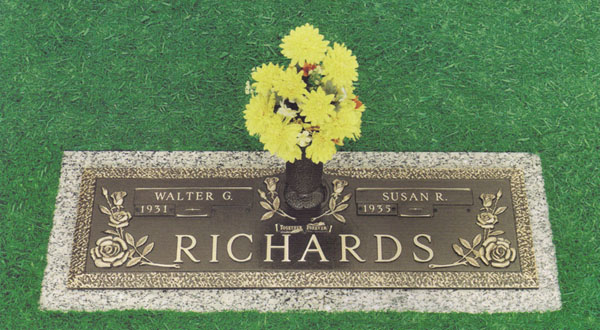
A bronze grave marker pairs a cast bronze plate with a granite base, giving a memorial raised lettering and artwork instead of engraving cut directly into stone. Families often choose one for the warmth of the bronze finish, the level of detail it allows in a design, or simply because it looks different from the granite markers around it. This guide walks through how bronze markers are built, what separates individual from companion styles, what actually drives the price up or down, and how bronze holds up outdoors compared with granite alone.
Key Takeaways
- A bronze grave marker is a cast bronze plate mounted on a granite base. It isn’t a substitute for granite; it’s paired with it.
- Bronze and all-granite markers age differently. Bronze develops a protective patina over time, while granite doesn’t change color or corrode the way metal can.
- Individual bronze markers are sized for one grave; companion markers are wider and built to hold two names and dates side by side.
- Cost is driven by size, whether the design is individual or companion, how detailed the bronze artwork is, and what’s included, such as a vase or emblem, rather than by the material category alone.
- Most cemeteries accept bronze markers, but flush-to-the-ground rules, size limits, and base requirements still vary by cemetery.
What Is a Bronze Grave Marker?
The bronze part of a bronze grave marker is a cast metal plate, typically holding the raised lettering, dates, and any artwork or emblem. That plate is set into or mounted on a granite base, which does the structural work of anchoring the memorial in the ground and giving it the size and weight cemeteries expect. Clear Stream’s Coventry Rose Bronze Marker is a straightforward example: a bronze rose design and lettering panel on a granite base, offered in three size combinations, with a gray granite base as standard.
An all-granite flat marker skips the bronze plate entirely. The name, dates, and any decorative border or symbol are engraved straight into the granite surface. Clear Stream’s Granite Traditional Cemetery Marker is that version: no bronze component, just engraved granite, available in ten granite colors including Georgia Gray, Jet Black, and Mahogany. Some markers sit in between: the Granite Marker with Bronze Vase is an all-granite companion marker with the lettering engraved directly into the stone, and the only bronze element is a built-in vase for flowers.
Bronze-on-Granite vs. All-Granite: What’s the Difference?
Neither material is universally the better choice. The right one depends on what a family wants and what the cemetery allows.
Appearance. Bronze gives raised, dimensional lettering and artwork with a warm metallic tone that contrasts against the granite base. Engraved granite is flush with the stone surface, and the design lives in the depth and shading of the cut rather than in a separate material.
Design approach. Bronze casting lends itself to intricate scenes and emblems, like the Last Supper artwork on Clear Stream’s Coventry Last Supper Bronze Marker, because the detail is molded rather than cut. Granite engraving can also carry detailed artwork, but the visual effect is different: everything sits on one plane and one material.
Maintenance considerations. Granite doesn’t oxidize or change color, so it generally needs less routine attention. Bronze develops a patina as it ages, which is a normal part of how the metal weathers outdoors, and the Durability and Care section below explains what that means in practice.
Cemetery requirements. Some cemetery sections specify granite only, others specifically permit bronze plaques, and some allow either as long as the marker meets height and flush-mounting rules. This varies enough by cemetery that it’s worth confirming before ordering; How to Select a Headstone That Fits Cemetery Rules covers what to check.
Purchasing considerations. Bronze markers add a second material and a casting process to the order, a factor worth raising directly when comparing options.
Individual and Companion Bronze Marker Styles
Individual Bronze Grave Markers
Individual bronze markers are sized for a single grave and typically pair one bronze plate with one granite base. Clear Stream’s Coventry line covers a range of motifs in this format. The Coventry Rose Bronze Marker, built around a rose design associated with love and remembrance, comes in three size options (bronze from 24″ x 12″ up to 24″ x 14″, with matching granite bases), includes a free emblem, and carries a lifetime warranty on the bronze casting. For a religious individual memorial, the Coventry Last Supper Bronze Marker uses the same construction with a detailed Last Supper scene instead, sized at 24″ x 14″ on a 28″ x 18″ granite base, and it includes cemetery approval and installation coordination along with the casting itself.
Companion Bronze Grave Markers
Companion markers are built for two people sharing one memorial and are wider than individual markers to hold two names, two sets of dates, and often a shared inscription. The Coventry Rose Bronze Marker (Companion) carries the same rose motif as its individual counterpart but scales up to four bronze size options, from 36″ x 13″ to 56″ x 16″, with granite bases sized to match. The Coventry Farm Scene Bronze Marker is a companion design built around a countryside scene rather than a floral one, and unlike some other Coventry options, it includes a bronze vase rather than offering one as an add-on. Clear Stream also carries a comparable design in the Stepping Stones line. The Stepping Stones Dogwood Bronze Marker uses dogwood blossom detailing at the same companion sizing as the Coventry Rose Companion, so the two lines give families a motif choice without changing the format.
Companion markers aren’t limited to the flat, side-by-side layout, either. The Stepping Stones Rose Bronze Marker (Vertical) is a companion memorial in an upright orientation, 16″ x 24″ on a 20″ x 28″ granite base, for families who want a companion marker with more visual presence than a flat design provides. For a broader look at how individual and companion memorials compare beyond bronze specifically, Single vs Companion Headstones Explained covers the format decision on its own.
What Affects Bronze Grave Marker Cost?
Clear Stream doesn’t publish set prices for bronze markers online, since sizing and options vary by product, but the factors that move cost up or down are consistent across the catalog:
- Individual vs. companion sizing. Companion markers use more bronze and a larger granite base than individual ones, which is reflected in the price.
- Bronze design complexity. A detailed scene, like the Last Supper artwork, involves more casting work than a simpler motif.
- Included accessories. Some markers, like the Coventry Farm Scene, include a bronze vase in the base price; on others, a vase is an optional add-on.
- Emblems and personalization. Several Coventry markers include one free emblem, with additional personalization available beyond that.
- Granite base size and finish. A larger or non-standard granite base adds material cost, though gray is the standard color across Clear Stream’s bronze marker line.
- Installation and cemetery coordination. Some listings, like the Coventry Last Supper Marker, include layout proofing and cemetery approval coordination as part of the order, which is worth factoring in when comparing options.
For a full breakdown of what’s typically bundled into a memorial purchase beyond the marker itself, see What’s Included in a Headstone Purchase. Families weighing bronze against a lower-cost option should also look at Affordable Headstones Without Compromising Quality, which covers budget-conscious granite choices in more depth.
Durability and Care Over Time
Bronze ages differently than granite, and understanding what’s normal helps set expectations. As bronze is exposed to the outdoors, it develops a patina, a thin oxidation layer that changes the surface color over time. According to National Park Service conservation guidance on outdoor bronze, this patina is a normal and protective part of how bronze weathers, forming a barrier that helps guard the underlying metal against deeper corrosion. The NPS recommends a conservative approach to cleaning outdoor bronze: gentle washing to remove dirt and grime, avoiding abrasive methods that could strip the patina itself, and periodic waxing, which helps slow further oxidation without changing the marker’s fundamental appearance.
Granite doesn’t go through this process. It doesn’t oxidize, and it holds its color and surface finish without the same kind of ongoing chemical change, which is why granite markers generally need less routine care. That doesn’t make one material more “durable” than the other in every sense. It means they age differently and ask for different kinds of attention. Granite’s own maintenance and lifespan get a fuller treatment in How Long Do Granite Headstones Last.
Cemetery Rules and Bronze Markers
Bronze markers are widely used and widely accepted, but “widely” isn’t “universally.” Some cemetery sections require flush, ground-level markers and specify bronze-on-granite as the expected style; others restrict bronze in favor of granite-only sections, particularly in older parts of a cemetery. Base thickness, overall footprint, and whether an upright companion design like the Stepping Stones Rose Vertical is permitted in a given section can all vary by cemetery. The full rundown of what to check before ordering, including memorial type, size limits, material restrictions, and foundation requirements, is in How to Select a Headstone That Fits Cemetery Rules.
Choosing Between Bronze and Granite for Your Situation
A few practical questions tend to settle the decision:
- What does the cemetery actually allow? Confirm this first, since it can rule out an option before appearance or budget even come into play.
- Do you want raised artwork or engraved detail? Bronze casting and granite engraving produce genuinely different looks, and it’s worth viewing both in person or in photos before deciding.
- Is this an individual or companion memorial? Companion bronze markers come in more size variations, including vertical formats, than a single-grave marker typically needs.
- How much upkeep are you comfortable with? Bronze’s patina is normal and manageable with occasional cleaning and waxing, but it does ask for more attention than granite alone.
- What’s included versus optional? Vases, emblems, and personalization vary by product, so it’s worth checking before comparing prices side by side.
Some families are drawn to bronze for its warmth and detail; others prefer granite’s low-maintenance simplicity. Both are established, cemetery-appropriate choices. When you’re ready to move forward with either option, you can start that conversation with Clear Stream Monuments and talk through the specifics for your family and cemetery.
Frequently Asked Questions
How much does a bronze grave marker cost?
It depends on size, whether it’s an individual or companion design, the complexity of the bronze artwork, and what’s included, such as a vase or emblem. Clear Stream doesn’t list a single fixed price across the bronze marker line since these factors vary by product; reach out directly for pricing on a specific design.
Is bronze or granite better for a grave marker?
Neither is better in every situation. Bronze offers raised detail and a distinct look but develops a patina that benefits from occasional cleaning and waxing. Granite doesn’t oxidize and generally needs less maintenance, but it can’t reproduce the same dimensional casting effect. Cemetery rules and personal preference usually decide it.
Can I get a companion or double bronze marker?
Yes. Clear Stream carries companion bronze markers, including the Coventry Rose Bronze Marker (Companion), the Coventry Farm Scene Bronze Marker, and the Stepping Stones Dogwood Bronze Marker in a flat format, plus the Stepping Stones Rose Bronze Marker (Vertical) for an upright companion design.
Do all cemeteries allow bronze markers?
Most do, but not universally. Some sections specify bronze-on-granite, others restrict it to granite-only, and rules around size, thickness, and flush mounting vary by cemetery. Check with the cemetery before ordering; How to Select a Headstone That Fits Cemetery Rules covers what to confirm.
How do I clean and maintain a bronze grave marker?
Gentle cleaning with water and a mild, non-abrasive approach is enough for routine care, and periodic waxing helps slow the natural oxidation process. Avoid harsh scrubbing or abrasive cleaners, since they can strip away the protective patina rather than just the dirt on top of it.