Understanding the Difference: Grave, Tombstone, and Headstone Explained
April 20, 2026 • Clear Stream Monuments • 19 min read
So, you’re looking into memorials and keep hearing terms like ‘grave tombstone,’ ‘headstone,’ and ‘grave marker.’ It can get a little confusing, right? Most people use them like they’re all the same thing, and honestly, even the folks who make and sell them sometimes do. But if you look closely, there are actually some differences, mostly tied to their history and how they were originally used. It’s not just about fancy words; understanding these distinctions can help you pick the right tribute for your loved one, making sure it fits the cemetery’s rules and truly honors their memory. Let’s break it down.
Key Takeaways
- While ‘tombstone’ and ‘headstone’ are often used interchangeably today to mean any stone marker at a grave, they originally had different meanings.
- Historically, a ‘tombstone’ was a large, flat stone that covered the entire grave, meant to protect it.
- A ‘headstone’ traditionally refers to an upright stone placed at the head of the grave, bearing inscriptions.
- Modern cemeteries often have specific rules about the size, material, and style of memorials, so it’s important to check these before choosing a grave tombstone.
- Materials like granite are highly recommended for their durability and resistance to weather, making them a long-lasting choice for any grave tombstone.
Understanding the Grave Tombstone Landscape
When we talk about remembering someone after they’re gone, the physical markers in a cemetery often come to mind. It’s a landscape filled with stones, each telling a story, but the terms we use can get a little mixed up. Let’s clear the air about what we’re actually looking at when we visit a cemetery.
Defining the Grave Tombstone
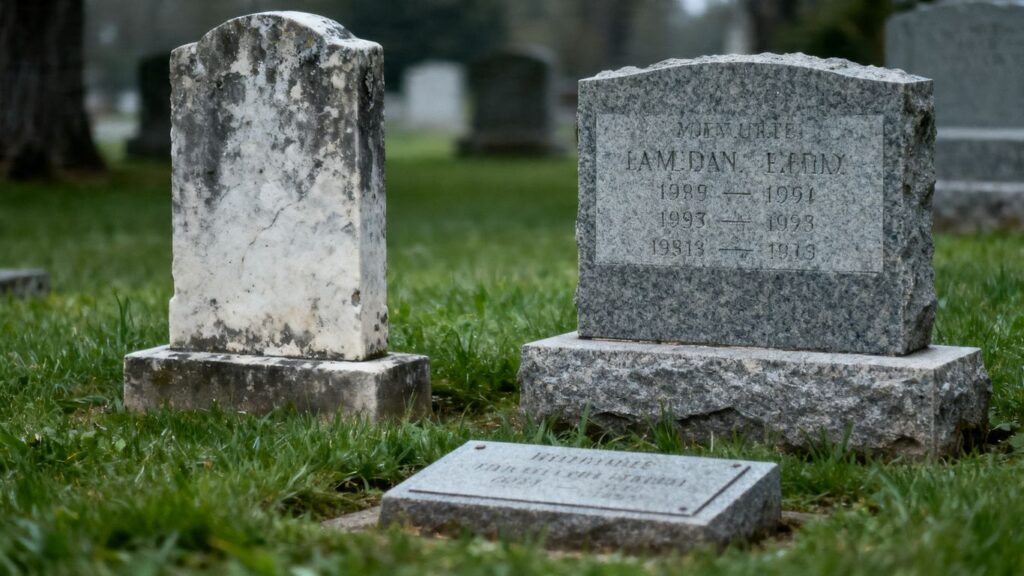
At its core, a grave marker is any object placed to identify a burial site. The terms ‘grave marker,’ ‘tombstone,’ and ‘headstone’ are often used interchangeably, which can be confusing. However, they each have subtle differences rooted in their history and typical form. A tombstone, in its most literal sense, refers to a stone that covers a tomb or grave, often a large slab. A headstone is typically an upright stone placed at the head of the grave. The entire cemetery landscape is a testament to how we choose to remember those who have passed.
Historical Roots of Grave Markers
Historically, grave markers served a very practical purpose: to mark the location of a burial. Early markers were often simple stones or wooden crosses. Over centuries, these evolved. In ancient times, elaborate tombs and mausoleums were built for the wealthy and powerful. For most people, however, simpler stones sufficed. The style and material of these markers often reflected the social status and available resources of the family. For instance, early markers might have been local fieldstones, while later periods saw the use of more durable and decorative materials like granite and marble. The evolution of these markers is a fascinating look into changing societal norms and craftsmanship. You can find more about the distinctions in memorial markers.
Modern Interpretations of Grave Tombstones
Today, the terms ‘tombstone’ and ‘headstone’ are often used synonymously with ‘grave marker.’ While a headstone is still generally understood as an upright stone at the head of the grave, and a tombstone might imply a larger, more substantial marker, the lines have blurred. Modern cemeteries often have specific regulations about the size, shape, and placement of markers. This leads to a variety of interpretations:
- Upright Headstones: The classic, visible marker.
- Flat Markers: Stones that lie flush with the ground, often preferred for ease of maintenance.
- Ledger Stones: Large slabs that cover the entire grave.
- Bronze Markers: Durable metal plaques, often mounted on a granite base.
The choice of marker today is a blend of tradition, personal preference, cemetery rules, and practical considerations like durability and cost. It’s about finding a way to honor a life that feels right for the individual and the family.
The materials used also play a big role in how these markers are perceived and how long they last. Granite is a popular choice for its strength and resistance to weathering, while marble offers a classic, softer look but can erode more quickly. Bronze is also very durable and develops a unique patina over time. Ultimately, the landscape of grave markers is diverse, reflecting a wide range of personal stories and historical influences.
The Nuances of Headstones
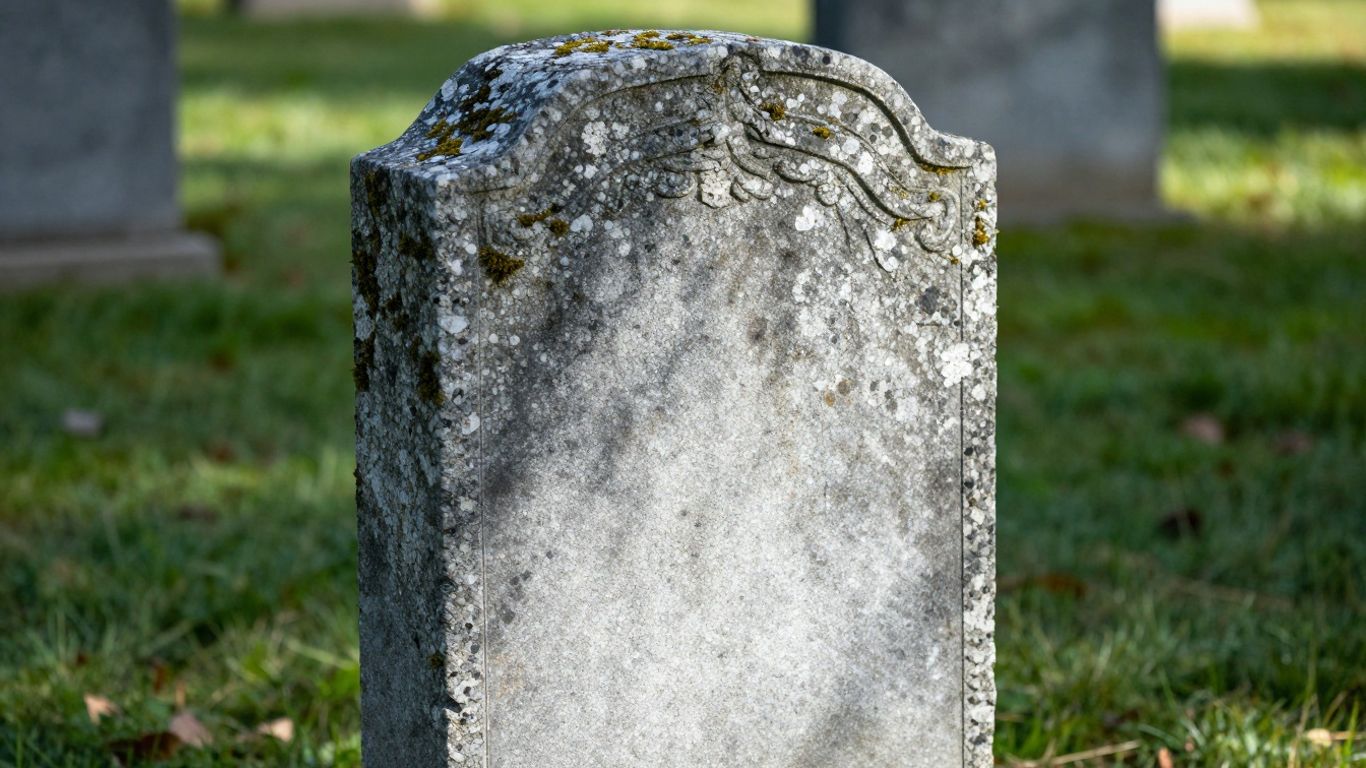
So, what exactly makes a headstone a headstone? It’s a term we hear a lot, and honestly, it’s probably the most common word people use these days when talking about grave markers.
What Constitutes a Headstone?
At its core, a headstone is typically an upright stone placed at the head of a burial plot. Think of it as the primary identifier for who rests below. It’s usually inscribed with the deceased’s name, birth and death dates, and often a personal message or epitaph. Unlike a full ledger stone that covers the entire grave, a headstone stands tall, marking the spot. It’s the classic image most people picture when they imagine a cemetery memorial.
The Evolution of the Headstone Term
While "headstone" is the go-to term now, it’s interesting to think about how language changes. "Tombstone" used to be more common, and some people still use it, especially for older or more elaborate monuments. But "headstone" feels more specific, more direct. It’s the marker at the head of the grave, after all. It’s become the standard in most modern cemeteries and for monument makers. You’ll find that most cemeteries today have specific rules about what kind of headstones they allow, so it’s always a good idea to check those out first.
Headstones in Contemporary Cemeteries
Today’s headstones come in all sorts of styles. You’ve got your traditional upright slabs, but also shaped ones that can be really unique, like a heart or a cross. Then there are slant headstones, which are angled for easier reading, and companion headstones for couples.
Here’s a quick look at some common styles:
- Upright Headstones: The classic, tall marker.
- Flat Markers: These lie flush with the ground, often used when cemeteries have height restrictions. They’re simple and neat.
- Slant Headstones: A middle ground, angled for better visibility.
- Shaped Headstones: Custom designs reflecting personality.
Choosing a headstone is a personal journey. It’s about finding a way to remember someone that feels right, balancing tradition with individuality. The material, the shape, the inscription – it all adds up to a lasting tribute.
When you’re looking at options, granite is a really popular choice because it’s so tough and lasts forever, resisting weather like a champ. Marble is beautiful too, but it can wear down faster. You can even find rock-style headstones that give a more natural feel. It’s a lot to consider, but finding the right headstone is a meaningful way to honor a life lived.
| Style | Description |
|---|---|
| Upright | Traditional, stands tall at the head of the grave |
| Flat Marker | Level with the ground, unobtrusive |
| Slant | Angled face for easier reading |
| Companion | Larger, for two individuals |
| Shaped | Custom-cut into various forms |
Exploring the Meaning of Tombstones
When we talk about remembering someone, the word "tombstone" often comes up. It sounds old, maybe a bit mysterious, right? And honestly, for a long time, it was quite different from what we see today. Originally, a tombstone wasn’t just a marker standing at the head of a grave. Think bigger – like a large, flat stone slab that actually covered the entire burial spot. The idea was to protect the grave from things like erosion or, well, unwanted disturbances. It was a more substantial, protective layer.
Original Purpose of Tombstones
The initial function of a tombstone was pretty practical. It served as a protective barrier and a clear identifier. In older times, especially in areas prone to soil shifting or where keeping a grave undisturbed was a major concern, these full-coverage stones made a lot of sense. They were built to last and to clearly mark the final resting place.
Tombstones as Grave Covers
This idea of a tombstone being a literal cover is key to understanding its history. Unlike the upright markers we’re used to now, these were designed to lie flat and span the whole grave. It was a way to create a solid, permanent boundary. While the term has broadened over the years, this original meaning highlights a different approach to memorialization, focusing on enclosure and protection.
The Modern Tombstone Identity
Today, the word "tombstone" is often used interchangeably with "headstone." Most cemeteries don’t use those large, flat covering stones anymore. Instead, we see those familiar upright monuments. So, while the term "tombstone" might still carry that historical weight of a grave cover, in everyday conversation, it usually just refers to any stone marker at a grave. It’s interesting how language evolves, isn’t it? It’s not uncommon to see a heart-shaped memorial, symbolizing love, referred to as a tombstone, even though its form is quite different from the original concept.
It’s worth noting that the style and purpose can vary greatly. Some memorials are tall and stately, like the Scroll Top 1A Headstone, offering a prominent presence. Others might be simpler. The important thing is that it serves as a tribute.
Here’s a quick look at how the meaning has shifted:
- Ancient Times: Large, flat stones covering the entire grave for protection.
- Middle Ages: The term starts to be used more broadly, but the concept of a substantial marker remains.
- 19th/20th Centuries: Usage becomes more generalized, often overlapping with "headstone."
- Today: Commonly refers to any upright grave marker, though the historical meaning still exists.
The evolution of the term "tombstone" shows us how memorial practices have changed. What was once a functional, protective cover has become a more symbolic marker, reflecting our changing ideas about remembrance and cemetery design. It’s a reminder that words, like monuments, can have a long and interesting history.
Distinguishing Grave Markers
When we talk about memorials in a cemetery, the terms can get a little mixed up. Let’s clear things up a bit. While "headstone" and "tombstone" are often thrown around, "grave marker" is a broader category that helps us understand the different ways we remember people.
The Role of Grave Markers
Basically, a grave marker is anything placed at a burial site to identify it and honor the person buried there. Think of it as the general term for any stone or monument that marks a grave. It’s about making sure that spot is recognized and remembered. These markers can come in all sorts of shapes and sizes, from simple, flat stones to elaborate upright structures. The main goal is remembrance, and the marker serves as a physical anchor for that memory.
Flat Markers vs. Upright Monuments
This is where things get a bit more specific. The biggest difference usually comes down to how the marker is positioned.
- Flat Markers: These lie flush with the ground or are only slightly raised. They’re often chosen for their understated look and ease of maintenance. They blend in nicely with the landscape and are great if a cemetery has rules about how tall monuments can be. Even though they’re flat, they still have plenty of room for names, dates, and a short message.
- Upright Monuments (Headstones/Tombstones): These are the taller, more traditional stones that stand up from the ground. They’re usually placed at the head of the grave, hence the name "headstone." They offer more surface area for inscriptions and designs, making them a more prominent feature in the cemetery.
Here’s a quick look at some common types:
| Marker Type | Description |
|---|---|
| Flat Marker | Lies level with or slightly above the ground. |
| Upright Headstone | Stands vertically at the head of the grave. |
| Ledger Stone | Covers the entire grave plot, lying flat. |
Cemeteries often have specific rules about what kind of markers are allowed. It’s super important to check these regulations before you decide on anything. They usually cover things like the maximum size, the materials you can use, and even the design itself. This helps keep the cemetery looking neat and safe for everyone.
Grave Markers in Cemetery Regulations
As mentioned, cemeteries are usually pretty strict about their markers. These rules aren’t just to be difficult; they’re there to keep the grounds looking uniform and to make sure everything is safe. For instance, some places might not allow tall monuments because of soil stability or to prevent them from falling over. Others might have specific requirements for the type of stone or the way it’s installed. It’s always best to get a copy of the cemetery’s rules before you start looking at memorial markers. This can save a lot of headaches down the line and make sure your chosen marker fits perfectly within the cemetery’s plan.
Cultural and Regional Variations
You know, when you start looking into grave markers, you quickly realize it’s not just about picking out a stone. What people call things, and what they expect from a memorial, can change a lot depending on where you are in the world, or even just in different parts of the country. It’s pretty interesting how traditions shape these final tributes.
Headstone and Tombstone in Western Cultures
In places like the United States and the United Kingdom, the terms "headstone" and "tombstone" often get tossed around like they mean the exact same thing. Most folks probably use "headstone" more often these days, especially for those upright markers you see at the head of a grave. "Tombstone" sometimes feels a bit older, maybe a little more formal, or even a touch dramatic, like something out of a history book. But really, for everyday talk, they’re pretty interchangeable in the West. You’ll see granite and marble used a lot, and the styles can range from simple, flat markers to elaborate, sculpted monuments.
Global Perspectives on Grave Memorials
Travel outside of Western Europe or North America, and things get even more varied. In some cultures, memorials are meant to be grand statements, almost like works of art, celebrating the family’s history and status. Think big, ornate structures. Then you have other traditions that lean towards simplicity. For instance, in Jewish customs, it’s common to place small stones on a grave marker. This practice has a long history, and it’s a quiet way to show you’ve visited and remembered someone. It’s a stark contrast to the elaborate mausoleums you might see elsewhere.
Here’s a quick look at some different approaches:
- Japan: Often features minimalist stone markers, sometimes with Buddhist inscriptions. Water is sometimes poured over the grave as a ritual cleansing.
- Eastern Europe: Wooden grave markers can still be found, carrying deep cultural meaning and a connection to older traditions.
- India: Memorials can vary widely, but sometimes include elaborate carvings or structures, reflecting diverse religious and regional customs.
- China: Traditional grave markers can be quite elaborate, often incorporating symbols and inscriptions that reflect family lineage and prosperity.
It’s easy to think of grave markers as just a stone with a name. But when you look around the world, you see they’re often much more than that. They can be symbols of faith, family history, social standing, or even just a quiet place for reflection. The way people choose to remember their loved ones is a reflection of their culture and beliefs.
Material Differences in Memorials
The materials used for grave markers also tell a story about regional availability and cultural preferences. Granite is a popular choice in many Western countries because it’s tough and lasts a long time, resisting weather pretty well. Marble is also beautiful, but it’s softer and can wear down more easily over the years. In some areas, you might see memorials made from local stone, or even wood, which has its own unique character and significance. Bronze is another option, often used for plaques or decorative elements, and it holds up well against the elements too. The choice of material isn’t just about looks; it’s about durability, cost, and what feels right within a specific cultural context.
Choosing Your Memorial
Picking out a memorial is a big deal, and honestly, it can feel pretty overwhelming. It’s not just about picking a stone; it’s about finding a way to honor someone’s life and leave a lasting memory. There are a few things to think about to make sure you get it right.
Consulting Cemetery Guidelines
First off, you can’t just pick anything. Cemeteries have rules, and they’re usually pretty specific. These rules cover everything from the size and shape of the marker to the materials you can use. Some places only allow flat markers, while others are fine with upright monuments. It’s really important to check these regulations before you get your heart set on something. You don’t want to design the perfect tribute only to find out the cemetery won’t allow it. Most cemeteries have this information readily available, so a quick call or a look at their website should clear things up. This step can save you a lot of heartache and money down the line.
Selecting Appropriate Materials
What the memorial is made of matters a lot, not just for looks but for how long it lasts. Granite is a popular choice because it’s super tough and can withstand the weather for ages. Marble is beautiful, but it can wear down over time, especially if you get a lot of rain or snow. Bronze is another durable option. Here’s a quick look at some common materials:
- Granite: Very durable, lots of color options, holds up well against weather.
- Marble: Classic look, but softer and can erode over many years.
- Bronze: Extremely durable, often used for plaques or on granite bases.
- Sandstone/Limestone: Historically common, but they don’t last as long as granite or bronze.
Think about the climate where the memorial will be and how much maintenance you’re willing to do. If you want something that will look pretty much the same for centuries, granite or bronze is probably your best bet. You can explore different memorial options at places like Clear Stream Monuments.
Making an Informed Decision for a Grave Tombstone
Once you know the rules and have an idea of materials, you can start thinking about the actual design. This is where you can really personalize it. Do you want a simple, flat marker, or a more traditional upright headstone? You can add names, dates, and even special messages or symbols. Some people even add etched pictures. It’s a good idea to think about the personality of the person you’re remembering. Were they quiet and reserved, or more outgoing? The memorial should feel like a true reflection of them.
It’s okay to take your time with this decision. It’s a deeply personal choice, and rushing it can lead to regrets. Visiting different cemeteries to see what you like and talking to monument makers can help you get a clearer picture of what’s available and what feels right for you and your loved one’s memory.
Consider the overall budget too. Costs can really vary depending on the material, size, and how much customization you want. Sometimes, simpler designs are just as meaningful and can be more budget-friendly. Pre-planning is also an option, which can help lock in prices and ease the burden on family later.
Wrapping It Up
So, there you have it. While most of us just call any stone marker at a grave a ‘tombstone’ or ‘headstone’ and honestly, nobody’s going to fault you for it, there are some subtle differences. Originally, a tombstone was more like a full cover for the grave, while a headstone was the upright marker at the head. Today, the lines are pretty blurred, and ‘headstone’ is probably the most common term for what you see in most cemeteries. What really matters, though, is that whatever you call it, it’s a way to remember someone. When you’re picking one out, just check with the cemetery about their rules – that’s the practical bit that actually matters more than the name.
Frequently Asked Questions
What’s the main difference between a headstone and a tombstone?
Think of it this way: a headstone is usually an upright stone placed at the very top of a grave, marking the head. A tombstone, in its oldest meaning, was more like a flat stone that covered the whole grave. Today, people often use both words to mean any stone that marks a grave, but headstone is the more common term for the upright ones you see most often.
Are grave markers, headstones, and tombstones all the same thing?
Not exactly, though they’re often used like they are! A grave marker is a general term for anything that marks a burial spot. A headstone is typically an upright marker at the head of the grave. A tombstone has older roots, originally meaning a stone covering the whole grave, but now often used like ‘headstone’.
What materials are usually used for these grave markers?
Most memorials are made from strong stuff that lasts a long time, like granite, marble, or bronze. Granite is a top choice because it’s super tough, doesn’t get easily damaged by weather, and comes in many colors. Marble looks nice but is softer and can wear down faster.
Do cemeteries have rules about what kind of grave markers I can use?
Yes, almost all cemeteries have rules! They often have specific guidelines about the size, shape, material, and even how the marker is put in the ground. This helps keep the cemetery looking neat and safe. It’s super important to check with the cemetery before you pick out a memorial.
What’s the difference between a flat marker and an upright headstone?
An upright headstone stands tall at the head of the grave, offering more space for writing and designs. A flat marker, on the other hand, lies level with the ground, giving a more subtle look and making it easier to mow the grass around it.
Why is it important to know the difference between these terms?
Knowing the differences helps you make a better choice when picking a memorial. It shows you understand the history and different styles available. Plus, knowing the specific terms can help you communicate clearly with cemetery staff and monument makers, ensuring you get exactly what you want for a lasting tribute.